170+ articles and counting

The Leadership Library

Practical, weekly articles on turning managers into leaders who run the business. Written by Jimmy Burroughes from real engagements with nearly 3,500 managers.

Try:

Weekly Leadership Insights

Practical ideas in your inbox every Tuesday

No spamUnsubscribe anytime

Latest Leadership Articles

New insights published weekly

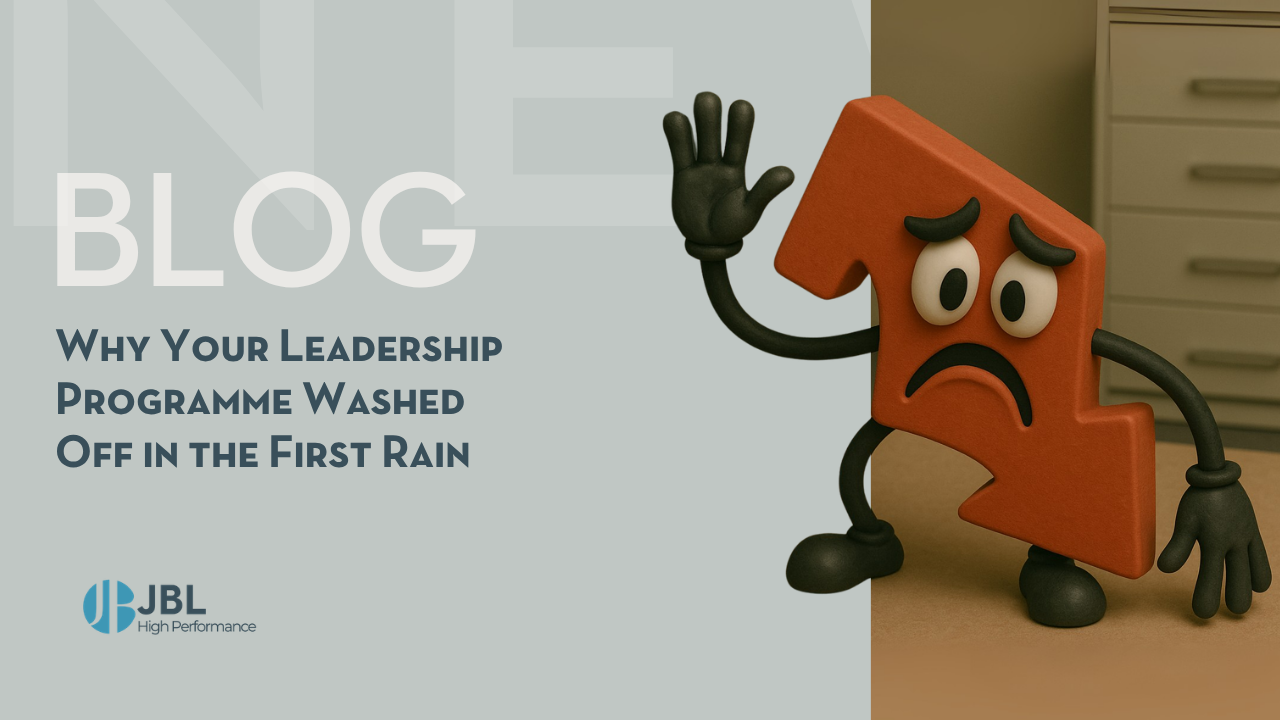
Sad red arrow character with arms and legs stands beside text about leadership programmes failing after initial challenges
|4 min read

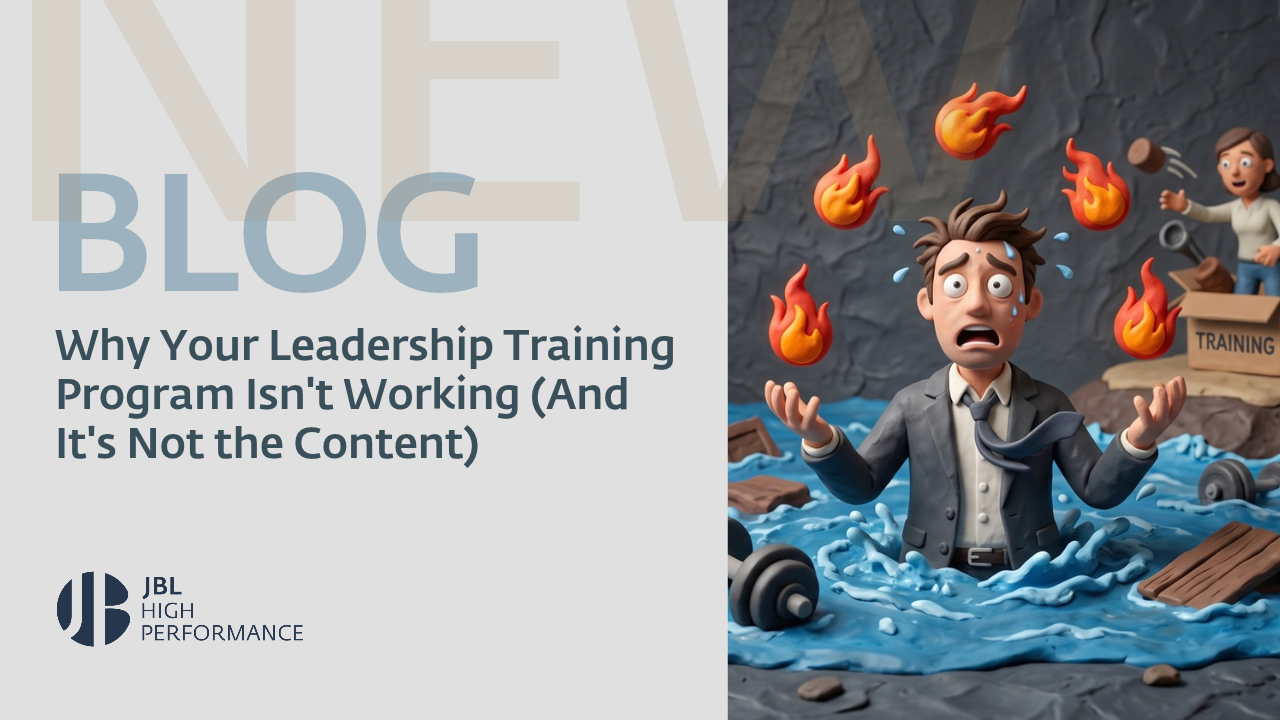
Why Your Leadership Programme Washed Off in the First Rain

I once used an analogy with a client that I have never been able to improve on, so I keep using it. Leadership programmes are like painting the outside of your house with water-based paint. It looks fantastic the day you finish. The colours are clean, the coverage is even, everyone compliments the result. Then it rains, and six weeks later you are standing in your garden looking at exactly the same weathered surface you started with.

Read article
A cartoon magnifying glass with eyes and arms looks closely at the ground beside the headline The Management Layer Is the Business on a leadership blog image
|4 min read

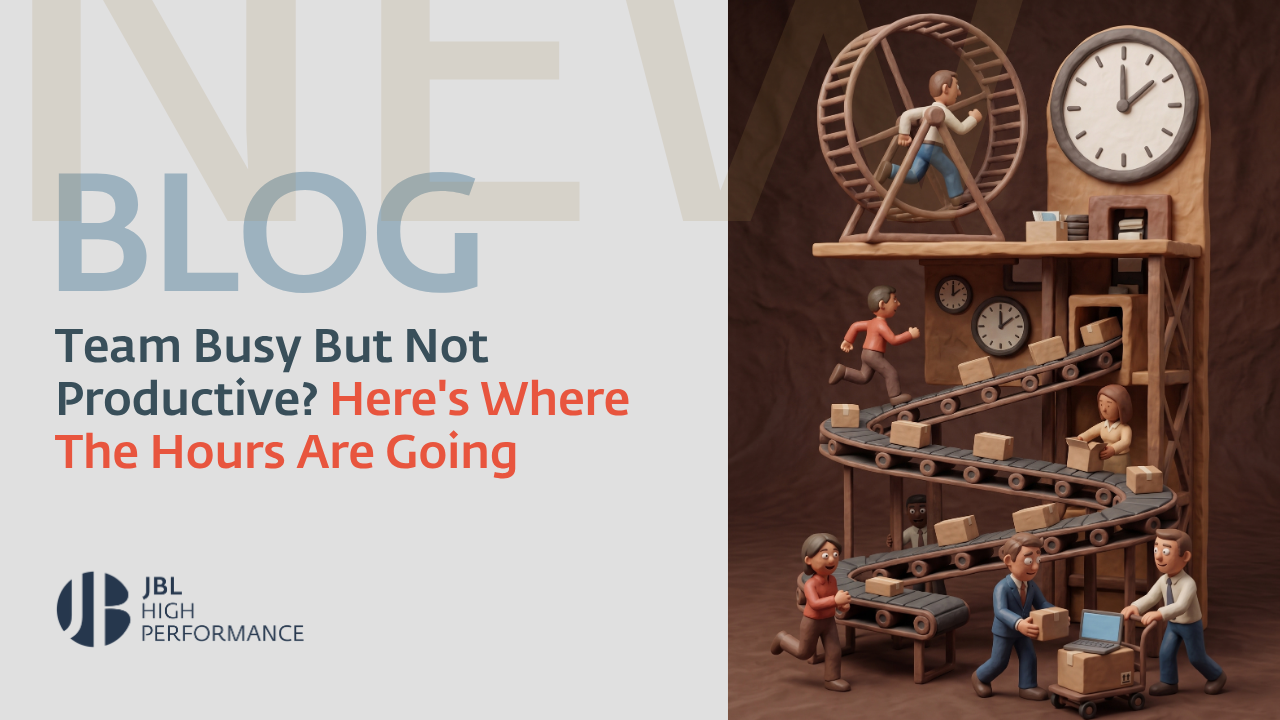
The Management Layer Is the Business

Your exec team sets direction. But direction without execution is a slide deck. The management layer is where strategy either becomes daily action or quietly dies - and if that layer is clogged with friction, nothing above or below it works properly. If your senior leaders are still firefighting, if escalations keep climbing, if the strategy looks right on paper but is not showing up in operations - the management layer is almost certainly where it is breaking down.

Read article

Core leadership concepts, explained

Short, plain-language definitions of the ideas that run through this library.

What is leadership friction?Leadership friction is the drag that builds up when decisions, approvals and information have to keep passing back through a manager before anything can move. It is the daily resistance that slows a capable team down, even when everyone is working hard.What is the bottleneck manager?A bottleneck manager is a leader through whom too many decisions and too much work must pass, so the team slows to the speed of that one person. The manager is not the cause of the problem so much as the point where it collects.What is firefighting leadership?Firefighting leadership is a pattern where a manager spends most of their time reacting to urgent problems instead of leading the important work. Every day is spent putting out fires, and the causes of those fires never get addressed.What is effective delegation?Effective delegation is handing over a whole outcome, along with the authority to make the decisions it needs, so the work gets done well without coming back to you. It is about transferring ownership, not just tasks.What is high performance leadership?High performance leadership is the practice of getting sustained, excellent results from a team without burning it out. It combines clear direction, real ownership and healthy standards so people do their best work over the long run, not just in short bursts.What is the escalation trap?The escalation trap is a pattern where a team routinely brings decisions up to the manager that it is capable of making itself. It feels like diligence, but it slowly turns the manager into a bottleneck and leaves the team unable to act on its own.What is manager effectiveness?Manager effectiveness is how well a manager gets results through their team rather than by doing the work themselves. You can see it in four numbers: time spent on work the team could do, avoidable escalations, how long people wait for sign-off, and how often peers solve problems without them.What is micromanagement?Micromanagement is when a manager controls how work gets done in so much detail that the team can't decide or act without them. It usually comes from unclear standards and a lack of trust in the system, not from a bad personality.What is span of control?Span of control is the number of people who report directly to one manager. The right number depends less on headcount and more on how many decisions those people need from the manager each week.What is a decision rights framework?A decision rights framework is a simple, written agreement about who makes which decisions, who must be consulted and who just needs to be told. It stops decisions drifting upwards by default.What is middle management?Middle management is the layer of managers between the senior team and frontline staff. They turn strategy into daily work, and when they're stuck in the weeds the whole business slows down.What is upward delegation?Upward delegation is when work or decisions that belong to a team member end up back with their manager. It often starts with a well-meant 'leave it with me' and ends with a manager doing their team's work.

Want to explore how this applies to your team?

If your leadership layer is creating bottlenecks instead of clearing them, let us talk.

Common questions

Leadership Library FAQs

Common questions about leadership development, results, and the Simplify to Amplify method

New leadership articles are published weekly. Each piece addresses a real challenge facing MDs, GMs and Heads of function, from reducing escalations to building teams that run the business without constant oversight.
Every article is written by Jimmy Burroughes, an ex-Army officer and GM who has personally transformed nearly 3,500 managers into leaders across 10+ countries. The insights come from real engagements, not academic theory.
The core shift is from task supervision to decision ownership. Managers need a repeatable framework to delegate effectively, clear escalation habits, and confidence to make decisions at their level. The Simplify to Amplify method addresses all three in 90 days, with results confirmed by their own bosses.
Simplify to Amplify is a leadership performance method that removes the friction stalling your management layer. It combines live cohort-based learning, applied to real work (not simulations), with Aiden, an AI leadership coach, for reinforcement between sessions. The result: fewer escalations, faster decisions, and ~4 hrs/week reclaimed per leader.
Start with articles tagged "delegation" and "escalation reduction". The core issue is usually decision bottlenecks: your managers escalate because they lack either permission, confidence, or a framework to decide at their level. The library covers all three.
Track three things: escalation frequency (are fewer decisions bouncing up?), time reclaimed (are leaders spending less time firefighting?), and boss-confirmed behaviour change at 90 days. These are the metrics JBL uses, and they are far more telling than satisfaction surveys.
JBL clients typically see ~4 hrs/week reclaimed per leader, 40% more decisions made at the right level, and an NPS of 67 (world-class threshold is 70, average B2B is 25). The 92.5% recommend rate confirms these are not just programme stats; they reflect real operational improvement.
Every article in the Leadership Library is free to read, share, and apply. If you want to explore how these ideas apply to your specific team, you can book a free 30-minute friction diagnostic.