Team Busy But Not Productive? Here's Where The Hours Are Going
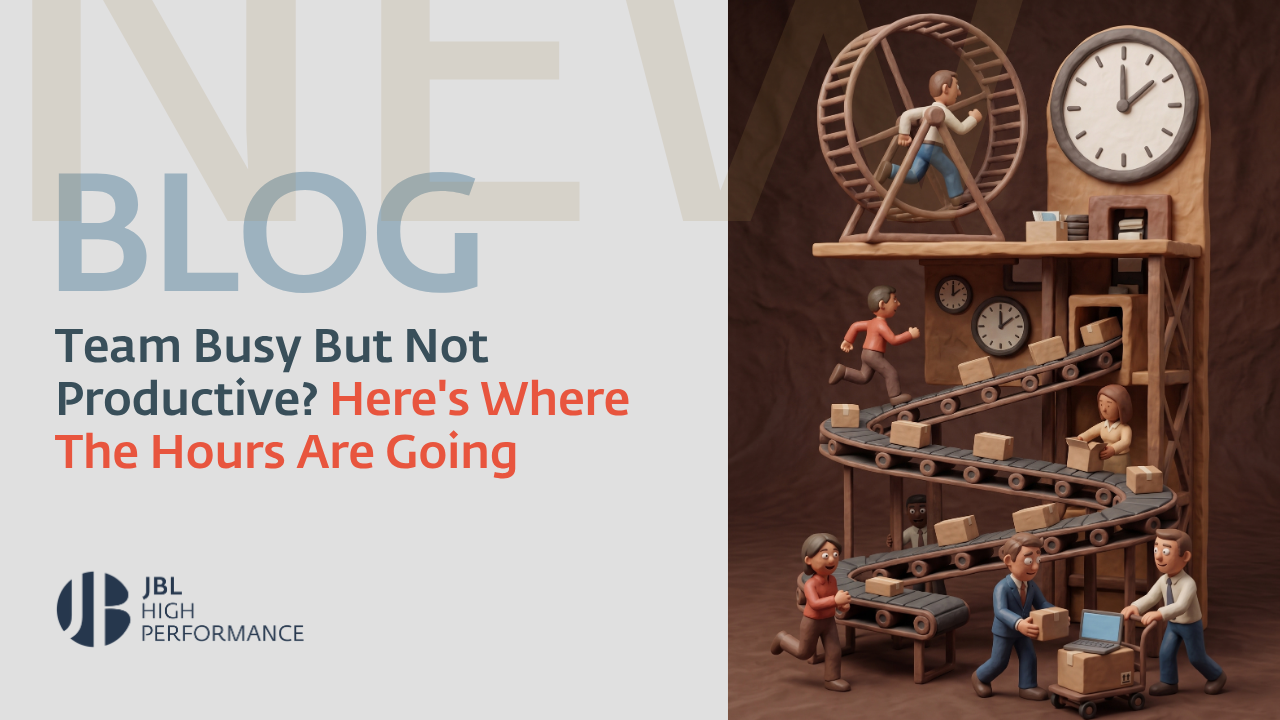
Answer: A team can be busy and unproductive at the same time because a large share of the week is going on work that belongs to somebody else. Escalations that should have died a level down, and the same exception handled every Tuesday because nobody has ever owned it. That work is real and it's tiring, and none of it turns into output. Count it for two weeks and you'll see the size of the gap.
Why is my team busy but not productive?
An engineering consultancy, four hundred people, utilisation sitting at a number the board is pleased with. Everyone's charging time. The quarter still came in light and nobody in the room can explain it.
Here's what one of their team leads did last Wednesday. Forty minutes on a scope question from a junior engineer who had the answer, had checked it against the contract, and wanted somebody senior to agree with her before she pressed send. Then an hour and a half went on a resourcing argument between two project managers who both wanted the same modeller, neither of whom would go first. At half four she took a client call that only existed because a change request had sat in a queue for nine days and the client had started to wonder whether anyone was reading it.
All of that got charged to something. None of it moved a project forward. On the timesheet it looks like a full day, which is why it's survived three years unchallenged.
Busy and productive stopped being the same thing somewhere around the point your managers took on more decisions than they had authority to settle. From there, most of their day goes on granting permission or waiting on it.
What does busy work look like in a management layer?
The recurring exception nobody's assigned climbs to the same desk every week, like a commuter catching the same train. A decision stalls, goes up, comes back with a question attached, and gets made eight days later by someone holding less information than the person who first raised it. Then there's the pre-clearing, where your managers walk things past you that you never asked to see, because somebody once got their fingers burned and the whole layer learned from it.
Take one of your managers, divide their salary by 2,040, and you've got their real hourly rate. Now price what they did on Wednesday. Some of it was a five-hundred-dollar-an-hour decision only they could make. A good chunk was a fifteen-dollar-an-hour task you're already paying somebody fifteen dollars an hour to do, and by taking it you removed that person's chance to get better at it.
Are you the bottleneck?
Take the two-minute assessment and see exactly where work is queueing around you, and what to hand over first.
Why adding people doesn't close the gap
Everyone's flat out, so the read is that you're at capacity, so you hire. Six months later the new people are also flat out and the number still isn't there. The routing that piled the work up in the first place never changed, so the extra hands filled with the same checking and waiting, and the escalations kept climbing because nobody had told them to stop.
And here's the reversal that takes people a minute. Your team's work ethic is what's hiding the problem from you. School rewarded working harder and longer, and so did university, and so did the first fifteen years of a career, so by the time somebody's running a function they're carrying a real bank of evidence that effort is the answer. Then the volume of decisions goes past what any amount of effort can reach, and the same instinct that built the career starts quietly holding the number down. A team that gave up at four o'clock would show you the problem in a fortnight. A team that stays until eight can absorb it for years.
How do you tell busy from productive?
Four numbers, and you can have all four inside a month: hours each manager gets back once the friction moves, how many of the recurring decisions get settled at their level, how much still climbs to you, and how many issues get resolved between peers with no referee involved.
That last one is the leading indicator and it's the one everybody ignores. Two managers who don't report to each other, sorting a resourcing clash between themselves. That single behaviour is what frees the hours and drops the escalation count.
I closed out a programme with a dairy business where the whole cohort freed up twenty-three and a half hours a week of collective time. One question did most of it. Instead of answering, they started asking their people what do you suggest. That's it. Managers who'd spent years being the answer stopped being the answer, and the time came back to them in pieces of ten and twenty minutes until it added up to most of a working week across the group.
An operations director in a manufacturing business, three hundred staff, put the same thing in a way I've never improved on. It was the first investment that reduced workload instead of adding to it, and his team got hours back in week two.
What to change in the next two weeks
Log it before you fix it. Every decision that reaches you from your direct reports and one level below, for ten working days. Next to each, write whose call it should have been, and why it didn't stop there.
Then take the fifteen or twenty that keep repeating and give each one a named owner at the lowest level where the information already sits. Say it out loud to that person. Across three thousand managers I've watched this with, written policy has never once been enough on its own.
Effort is the one thing you've never had to ask this team for. Room is the thing they haven't got, and room is the part you control.
Where is the friction in your team?
The Leadership Friction Finder pinpoints where effort is leaking, so you fix the cause rather than the symptom.
FREQUENTLY ASKED QUESTIONS
Why is my team busy but not productive?
Most of the week is going on work that belongs elsewhere: decisions that stall and climb, and exceptions nobody has ever owned. It fills a timesheet and produces nothing you can bill or ship.
Is busyness a sign of poor productivity?
On its own, no. Busyness is a signal to go and look. The thing worth measuring is how much of that week your managers control, and how much of it arrives from somewhere else.
How do I make my team more productive without adding headcount?
Move the recurring decisions down to where the information sits, and make peers settle things sideways before anything travels upward. That returns hours without changing the org chart or the cost line.
How long before productivity improves?
Escalation counts shift inside three weeks. Reclaimed hours show up around the ninety day mark. The peer-to-peer number takes a full quarter, because managers spend the first month testing whether using authority with each other costs them anything.
Jimmy Burroughes, JBL High Performance. Simplify to Amplify.
If any of this sounds familiar, here's where to start
- Not sure where the friction is building in your management layer? → See where decisions stall, escalations pile up, and where good people burn out
- Wondering if you've become the bottleneck yourself? → Take the free 5-minute assessment
Start this week
Busy all day and still behind?
The Quick-Win Pack is five five-minute fixes for the overloaded leader, each built on a framework I use with paying clients. Every fix runs live on the page and hands you a finished, ready-to-use plan in minutes, with no AI account of your own needed. Just $19, and included free with Amplify and the Six Week Reset.
Get the Quick-Win PackExplore this topic

Jimmy Burroughes
FounderFormer British Army officer and corporate GM who has transformed nearly 3,500 managers into leaders across 30+ organisations. Creator of the Simplify to Amplify methodology, author of Beat Burnout, Ignite Performance, and two-time Global Recognition Award winner.
Keep exploring
Want to know where the drag really is?
Before you change anything, get an honest read on the friction slowing your team down. Take a short, free diagnostic and see exactly where the time is going.