How to Pick Which Managers to Develop First for Real ROI
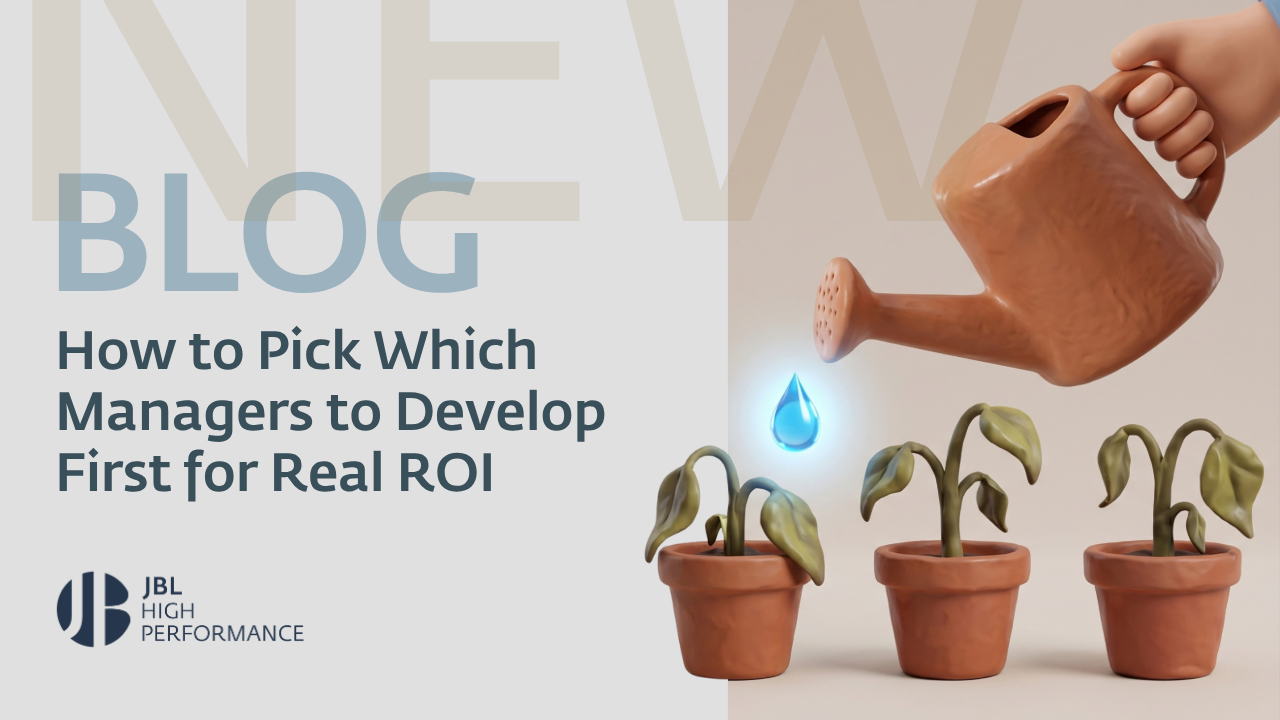
Most leadership budgets are tighter than they used to be, and that forces a decision many organisations keep avoiding.
Stop putting everyone through a programme. Start investing in the few who will move the business.
Leadership programmes don't fail because the content is wrong. They fail because the wrong people get put on them.
Here is the selection method I use when teams want outcomes. Two filters.
The 2 Filters That Matter
Filter 1: Impact
Can this person materially improve business performance in the next 90 days?
Impact means their role touches real outcomes:
- delivery, customers, risk, revenue, quality
- a critical team
- a messy interface between functions
- a high-cost bottleneck (meetings, rework, decision delays, escalation)
Quick test: If this leader gets better, does the business feel it quickly? If yes, they're in the frame.
Filter 2: Coachability
Are they willing to change? Willing to do it, not just talk about it.
Coachability looks like:
- they take feedback without drama
- they try things between sessions
- they stop defending old habits
- they can admit what's not working
- they want responsibility, not comfort
Quick test: Do they apply, or do they attend? If they attend, don't waste the seat.
What Happens When One Filter Is Missing
This is where most organisations lose money on development spend.
High Impact, Low Coachability
This is the "brilliant but stuck" leader. Big role, big influence, big potential upside.
But they:
- argue with the feedback
- blame the organisation
- don't practise
- don't change what they do week to week
You invest in them and nothing shifts. Worse, it sends a message that development is optional and accountability is negotiable.
Impact without coachability is a high-cost gamble.
If you still want to back them, put conditions on the seat:
- clear outcomes in 90 days
- manager involvement
- expectation of application
- willingness to be coached
If they won't agree, don't put them in.
High Coachability, Low Impact
This is the "keen learner" problem.
They show up, do the work, and are a joy to have in the room. But their role doesn't move the business.
So you get:
- great feedback scores
- personal growth stories
- very little organisational impact
This is a targeting mistake, not a reflection on the person.
Bottom line: coachability without impact gives you development, not ROI. Still worth doing at times, but be clear about the purpose. If the goal is performance improvement this quarter, this isn't your cohort.
Low Impact, Low Coachability
Do not spend budget here. This is where sheep dip comes from.
Are you the bottleneck?
Take the two-minute assessment and see exactly where work is queueing around you, and what to hand over first.
Why Being Selective Produces Better Returns
A lot of teams avoid targeting because they're worried about fairness. Fairness in a business means investing where it creates results and lifting the standard for everyone. It does not mean equal spend.
Target properly and you get a ripple effect:
- execution improves
- meetings reduce
- decisions speed up
- standards rise
- teams feel the difference
And then the business trusts the investment more, not less.
A Simple Way to Run Selection (Without a Big Process)
If you want this to move fast, do this:
- Ask each GM or functional lead for 1 to 2 nominations only.
- Make them answer two questions.
- HR sanity-checks coachability in a short conversation.
- Confirm seats and start inside the quarter.
That's how you avoid months of panels and politics.
What to Run: Two Ready-to-Roll Options
If you want programmes that match this approach, here are two that are built for it.
The 6 Week Reset
For leaders who are buried in noise and need traction fast.
Designed to:
- cut meeting load
- reclaim time and capacity
- sharpen priorities
- install a simple execution rhythm
This is the right fit when the business is saying, "We need improvement now."
Amplify
For mid to senior leaders who need to lift from busy management into high-performing leadership.
Designed around:
- simplification in complex environments
- decision making and execution under pressure
- leading through others (so they stop being the bottleneck)
- implementation support so behaviour changes at work, not just in the room
Both are practical, commercially grounded, and built around application.
Where is the friction in your team?
The Leadership Friction Finder pinpoints where effort is leaking, so you fix the cause rather than the symptom.
The Final Word
If you want leadership development to work, start with selection, not the programme. Impact and coachability. If either is missing, ROI collapses.
If you would like a simple 10 question nomination form template, send me an email and I'll get it to you.
To download an overview of Amplify and the 6 Week Reset: reply "RESET" or send me a direct message.
If this sounds like your week
Your managers are not the problem. They are where the problem is stuck.
When your last leadership spend was signed off, did anyone go back to those managers' bosses and ask what changed? That question is the JBL Outcome Standard, and it is how I work.
- Find the friction. A short diagnostic that shows which decisions are stalling, and at what level.
- Am I the bottleneck? Ten questions on where your week is actually going.
- How I work with GMs. Six weeks, one hour a week, up to twelve of your managers, scored by their own bosses.
- Beat Burnout, Boost Performance. The book.
- The High Performance Leader podcast.
Managers I work with reclaim around four hours a week, and their bosses score the change 8.75 out of 10. Would it be a crazy idea to find out how we did this? Book a scoping call.
Start this week
Busy all day and still behind?
The Quick-Win Pack is five five-minute fixes for the overloaded leader, each built on a framework I use with paying clients. Every fix runs live on the page and hands you a finished, ready-to-use plan in minutes, with no AI account of your own needed. Just $19, and included free with AMPLIFY and the Six Week Reset.
Get the Quick-Win PackQuestions managers ask about this
How do I choose which managers to develop first?
Focus on two key factors: impact and coachability. Choose managers whose roles affect critical business outcomes within 90 days and who are willing to change, take feedback, and apply new behaviours. Avoid selecting those who either lack influence or resist development efforts to ensure real return on investment in leadership training.
What happens if a manager has impact but lacks coachability?
Managers with high impact but low coachability tend to resist feedback, avoid practising new skills, and do not change behaviour. Investing in them often leads to little or no business improvement and can undermine accountability. If you still invest, set clear conditions like measurable outcomes and manager involvement to reduce risk.
Can I develop managers who are coachable but have low impact?
Managers who are coachable but have low impact often grow personally but do not move the business significantly. Their development is valuable for future potential or morale but will not deliver immediate performance improvements. Target this group only if your goal is long-term growth rather than quick business results.
How can I quickly select managers for development programmes?
Ask each general manager or functional lead to nominate one or two managers. Use a brief conversation to check coachability and confirm their impact on business outcomes. Avoid lengthy panels or politics by making decisions quickly and starting development within the current quarter to drive fast results.
Explore this topic
Hear this discussed on the podcast
Episodes of The High Performance Leader that cover the same ground.

Jimmy Burroughes
FounderFormer British Army officer and corporate GM who has transformed nearly 3,500 managers into leaders across 30+ organisations. Creator of the Simplify to Amplify methodology, author of Beat Burnout, Ignite Performance, and two-time Global Recognition Award winner.
Keep exploring
Want to know where the drag really is?
Before you change anything, get an honest read on the friction slowing your team down. Take a short, free diagnostic and see exactly where the time is going.