How to Stop Firefighting and Start Leading Your Team Forward
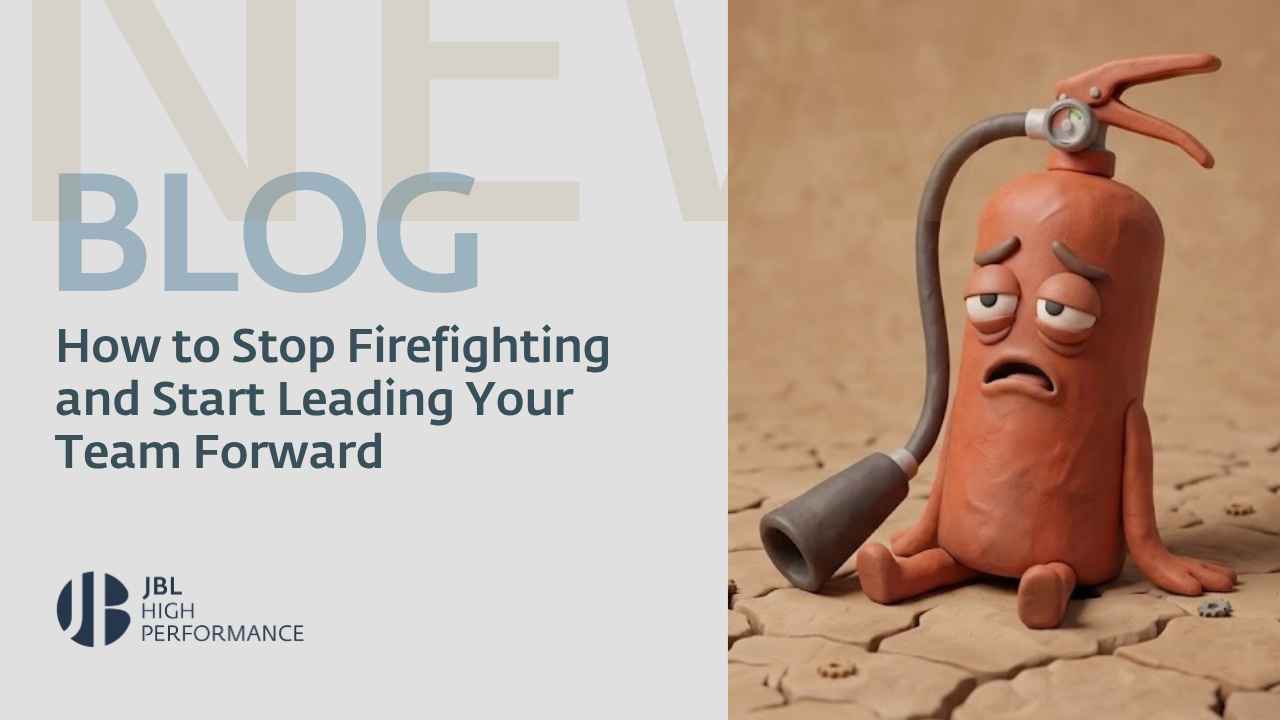
Your day starts with a clear agenda and ends with you having solved everyone else's problems. Again.
Being good in a crisis is costing you more than you think.
Every time you step in to fix something urgent, your people notice. They admire it. They rely on it.
That reliance is the problem.
Your team cannot break free from constant crisis while you are always there to resolve it for them.
Why Always Saving the Day Backfires
When you are always there to save the day:
- Your team stops solving problems
- Your managers stop thinking ahead
- Your fires get bigger, not smaller
The reason you are stuck in this loop is straightforward.
Your organisation has learned a simple lesson: why prevent problems when the boss will always fix them?
Every time you save the day:
- You train your team to wait for rescue
- You make escalation the fastest path to action
- You guarantee the next crisis will find you
Are you the bottleneck?
Take the two-minute assessment and see exactly where work is queueing around you, and what to hand over first.
A Question Worth Sitting With
What if being great at fixing problems is actually your biggest problem?
Sit with that for a moment.
While you are proud of your quick solutions, consider what you are missing. Great leaders prevent fires. Average leaders fight them.
The Amplify Challenge
For the next month:
- Don’t solve problems brought to you
- Ask “What is your suggestion?” instead of giving answers
- Celebrate people who prevent problems
- Reward those who spot fires before they start
When reactive leadership is the norm, stepping back is the harder and bolder choice.
Are you ready to put down the fire hose, or are you too addicted to being the hero?
If this sounds like your week
Your managers are not the problem. They are where the problem is stuck.
When your last leadership spend was signed off, did anyone go back to those managers' bosses and ask what changed? That question is the JBL Outcome Standard, and it is how I work.
- Find the friction. A short diagnostic that shows which decisions are stalling, and at what level.
- Am I the bottleneck? Ten questions on where your week is actually going.
- How I work with GMs. Six weeks, one hour a week, up to twelve of your managers, scored by their own bosses.
- Beat Burnout, Boost Performance. The book.
- The High Performance Leader podcast.
Managers I work with reclaim around four hours a week, and their bosses score the change 8.75 out of 10. Would it be a crazy idea to find out how we did this? Book a scoping call.
Start this week
Busy all day and still behind?
The Quick-Win Pack is five five-minute fixes for the overloaded leader, each built on a framework I use with paying clients. Every fix runs live on the page and hands you a finished, ready-to-use plan in minutes, with no AI account of your own needed. Just $19, and included free with AMPLIFY and the Six Week Reset.
Get the Quick-Win PackQuestions managers ask about this
How can I stop solving all my team's problems for them?
Start by refusing to provide solutions immediately. Instead, ask your team for their suggestions on how to handle issues. Encourage managers to think ahead and reward those who prevent problems before they arise. This shift reduces dependence on you and helps build a proactive team culture.
What are signs my leadership style causes constant firefighting?
If your team relies on you to fix urgent problems, your managers avoid forward planning, and crises keep growing, these are key signs. It means your organisation expects you to always step in, which prevents your team from developing problem-solving skills and leads to repeated emergencies.
Why is reacting to problems quickly a leadership problem?
Quick fixes train your team to wait for rescue rather than take initiative. This creates a cycle where escalation is the fastest route to action, increasing your workload and allowing fires to grow. Effective leaders focus on preventing problems, not just reacting to them.
How do I identify where decision-making is stalling in my team?
Conduct a brief diagnostic to find which decisions are delayed and at what organisational level. Ask if you are the bottleneck by reviewing where your time is spent during the week. Knowing this helps target support to managers and improve overall team performance.
Explore this topic
Hear this discussed on the podcast
Episodes of The High Performance Leader that cover the same ground.

Jimmy Burroughes
FounderFormer British Army officer and corporate GM who has transformed nearly 3,500 managers into leaders across 30+ organisations. Creator of the Simplify to Amplify methodology, author of Beat Burnout, Ignite Performance, and two-time Global Recognition Award winner.
Keep exploring
Want to know where the drag really is?
Before you change anything, get an honest read on the friction slowing your team down. Take a short, free diagnostic and see exactly where the time is going.