The Trust Problem You Built Without Realising
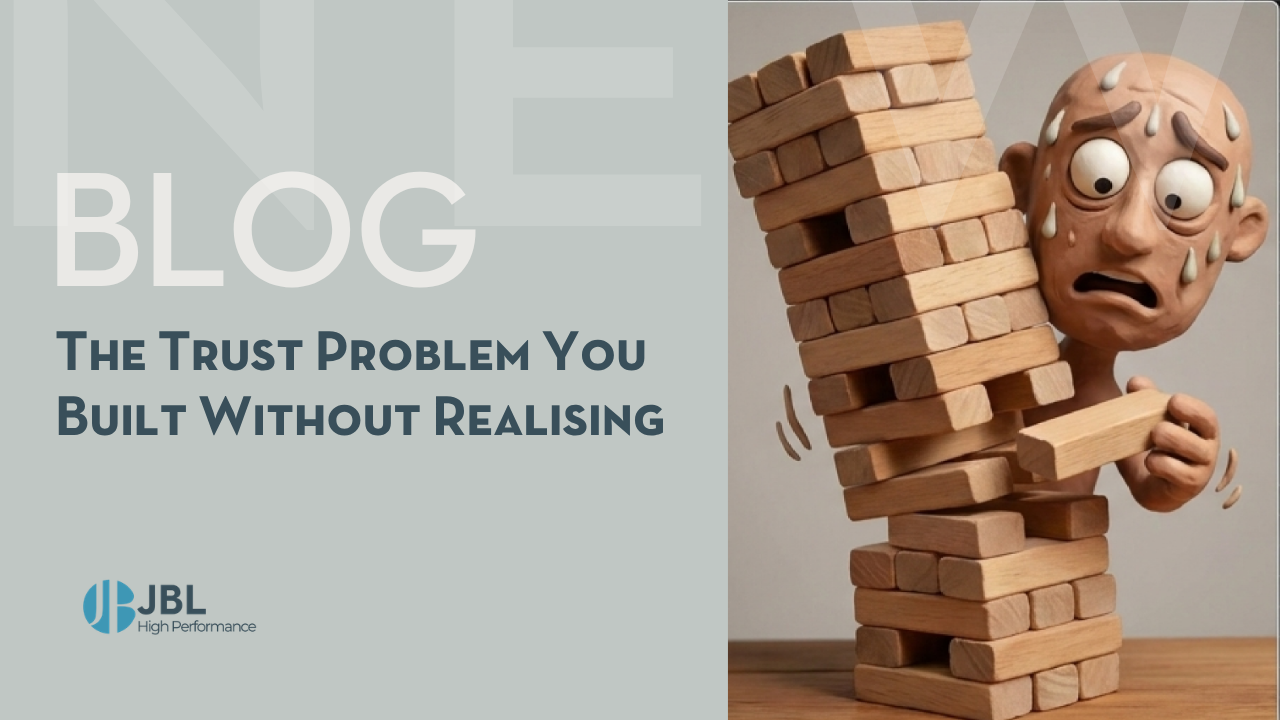
Everything lands on your desk. Decisions that should have been made two levels below. Escalations from managers who are capable but keep checking upward before acting. A management layer that is technically competent and operationally cautious to the point of inaction. If this is your week, the problem is probably not their capability.
It is the trust environment you built around them. And it is costing you execution speed.
What low trust actually looks like in an operational business
Trust, in an operational context, is the thing that determines how fast decisions move.
When trust is high, a manager makes a call, their boss backs it even if it turns out to be wrong, and the whole layer learns and moves forward. When trust is low, that same manager checks upward before deciding, waits for approval, and escalates things they should own.
The symptoms look like a capability problem. They are almost always a trust problem.
You did not inherit it. You built it.
Not intentionally, and not all at once. But through a hundred small signals over time.
Every time a manager made a decision and got second-guessed after the fact, the message was clear: check with me next time. Every time a mistake led to consequences disproportionate to the mistake itself, the message was clearer still: the safest move is to do nothing until someone above you says so.
Trust was not broken in one moment. It was eroded by a system that punishes initiative more than it punishes inaction.
Where trust actually lives
Most GMs assume trust is built through big gestures. It is not.
Trust builds in small, daily interactions that most leaders do not notice. Whether you ask your manager what they think before telling them what you think. Whether you let a decision stand even when you would have done it differently. Whether you respond to a mistake with curiosity or with blame.
Those micro-moments are where trust lives. And they compound in exactly the same way that mistrust compounds.
We use the SERVICE framework to map these moments across a management layer. Where they are happening consistently, trust holds. Where they are missing, escalations fill the gap.
Are you the bottleneck?
Take the two-minute assessment and see exactly where work is queueing around you, and what to hand over first.
Why this is an execution problem, not a soft-skills problem
A management layer with high trust makes faster decisions, escalates less, resolves more issues at the right level, and retains better.
A management layer with low trust does the opposite. And the MD ends up carrying sixty-hour weeks wondering why every decision still requires their involvement.
This shows up directly in delivery speed, escalation volume, and capacity at the top. It is not abstract. It is in your calendar and your cost base.
What actually rebuilds it
Not a trust workshop. Not an offsite session on values.
When we worked with one manufacturing business through Simplify to Amplify, the operational changes created the conditions for trust to rebuild.
- Decision rights were clarified so managers knew what they owned.
- Escalation pathways were defined so managers felt safe making calls without checking upward first.
- Consequences for wrong decisions became proportionate and learning-focused rather than punitive.
The results, confirmed by the participants’ own bosses: escalations down 15% inside 90 days. 75% of bosses said they saw fewer escalations and better decisions at the right level. The bosses rated the overall change 8.75 out of 10 and confirmed they would sponsor it again.
Nobody ran a trust exercise. The trust rebuilt because the system changed.
Where is the friction in your team?
The Leadership Friction Finder pinpoints where effort is leaking, so you fix the cause rather than the symptom.
The question worth sitting with
If your management layer is slow to decide, quick to escalate, and cautious to the point of inaction, ask one question before commissioning anything: what signals have we been sending about what happens when someone makes a call and gets it wrong?
The answer will tell you whether you have a capability gap or a trust gap. And the intervention required is completely different depending on which one it is.
We will review where trust gaps are creating the most friction in your management layer and whether Amplify is the right fit to address it. No obligation. No sales pitch. Just a practical discussion.
If any of this sounds familiar, here is where to start
- Not sure where the friction is building in your management layer? See where decisions stall, escalations pile up, and where good people burn out
- Wondering if you’ve become the bottleneck yourself? Take the free 5-minute assessment
Start this week
Busy all day and still behind?
The Quick-Win Pack is five five-minute fixes for the overloaded leader, each built on a framework I use with paying clients. Every fix runs live on the page and hands you a finished, ready-to-use plan in minutes, with no AI account of your own needed. Just $19, and included free with AMPLIFY and the Six Week Reset.
Get the Quick-Win PackExplore this topic
Hear this discussed on the podcast
Episodes of The High Performance Leader that cover the same ground.

Jimmy Burroughes
FounderFormer British Army officer and corporate GM who has transformed nearly 3,500 managers into leaders across 30+ organisations. Creator of the Simplify to Amplify methodology, author of Beat Burnout, Ignite Performance, and two-time Global Recognition Award winner.
Keep exploring
Want to know where the drag really is?
Before you change anything, get an honest read on the friction slowing your team down. Take a short, free diagnostic and see exactly where the time is going.