Why Employees Don’t Want to Be Managers Anymore (And What You’re Not Seeing)
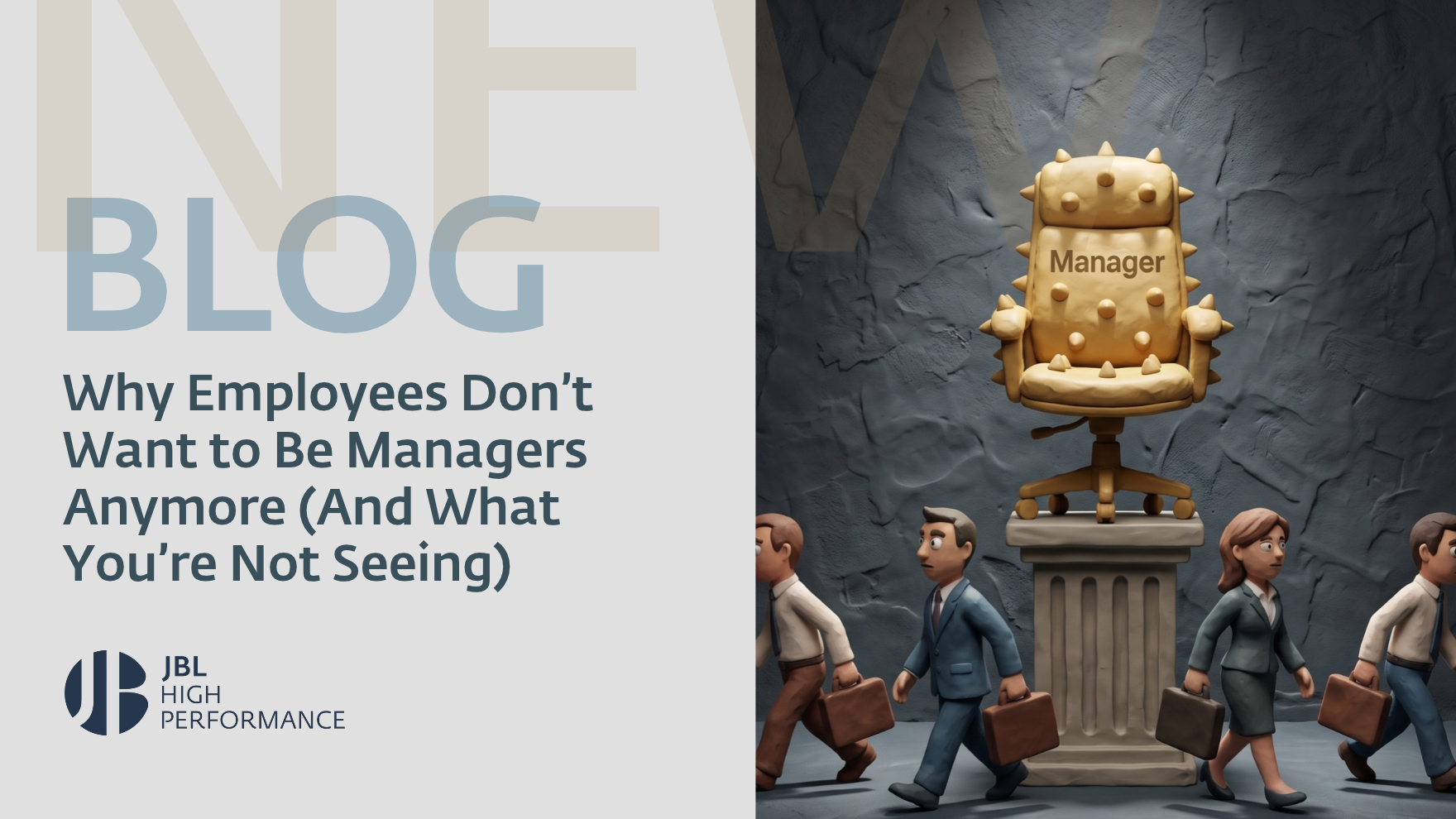
We've stacked the deck against leadership. Then we act surprised when nobody wants the job.
I see this pattern across every business we work with, in ten plus countries now. It isn't one lazy generation. It's a system problem, and it's getting worse.
Here's how it plays out.
My generation, the 35 to 55 year olds, is reaching the upper echelons of organizations right now. We were brought up on one answer to every problem: work harder, work longer. Over-commit. Say yes. Be in every meeting. Solve every problem. That was the whole playbook. And it doesn't generate clarity, priority, or strategy. It just generates more hours.
The 25 to 35 year olds coming up behind us are watching that closely. They're seeing people work brutal hours with no clarity, struggling to hit results anyway, working themselves toward nervous breakdowns and early graves. Some leave the business entirely to find something else. They're not inspired by what they're watching. Why would they be?
Then there's Gen Z, who are opting out before they even start. More responsibility, same pay, no real payoff. Their read is simple: this leadership stuff looks like it sucks. So why would I want to do that?
Look at the Gallup numbers and you'll see it in the data too: widespread disengagement across leaders, managers, and employees. Lots of leadership happening, very little of it making a difference. And a genuine lack of hunger from people who'd be next in line to lead.
Here's a thought that isn't popular: maybe Gen Z's boundaries are healthier than ours ever were. We're the generation who'll stay through the weekend because the boss said it has to happen. They're the generation saying, that doesn't work for me. I've got a life outside work. I'm here nine to five, and the rest of my time is out of bounds. If you're asking me to curtail that, no thank you.
That's not entitlement. It might just be better sense than we had.
Why the gap keeps widening
Part of this comes down to corporate restructuring over the last twenty five years. Organizations have flattened out, direct reports now sit straight under executives, or a whole management band has been stripped out of the middle. So the jump from manager one to manager three is now a massive leap in capability and experience, with nobody building that experience along the way.
Larger organizations tend to cover the basics well. Congratulations, you're a manager, here's some prioritization training, here's a crucial conversations framework. After that, you're mostly left to work it out yourself, until an executive coach or a development program comes along much later. Smaller organizations often skip even that. You're just thrown in.
So you end up with the people actually running the business, heads of function, GMs, VPs, SVPs, operating on manager 101 skills and gut feel. Very little coaching. Very little mentoring. Very little structure from the organization to help them get better.
These are the people melting under the pressure the organization has placed on them, with almost no support to match it.
What we'd suggest instead
You don't need to train everybody. Choose the twelve people who are highly coachable, invest properly in them, and you'll see it move your bottom line.
But the underlying problem doesn't go away until it's addressed directly: a generation with less desire to lead, a leadership development system that isn't closing the gap, wider jumps between levels than there used to be, and a layer above them still convinced that working harder and longer is the answer. Put those together and you've got a genuine perfect storm, bad for performance, bad for people's health, bad for whether anyone below you wants your job in five years.
If the people below you are watching you run yourself into the ground with no clarity and no support, and deciding leadership isn't for them, that's not them being soft.
That's them paying attention.
Want to know where the friction actually sits in your business? The free assessment at jblhighperformance.com/assessment takes about five minutes and gives you a one page outline of the problem and what to do about it.
Start this week
Busy all day and still behind?
The Quick-Win Pack is five five-minute fixes for the overloaded leader, each built on a framework I use with paying clients. Every fix runs live on the page and hands you a finished, ready-to-use plan in minutes, with no AI account of your own needed. Just $19, and included free with AMPLIFY and the Six Week Reset.
Get the Quick-Win PackExplore this topic

Jimmy Burroughes
FounderFormer British Army officer and corporate GM who has transformed nearly 3,500 managers into leaders across 30+ organisations. Creator of the Simplify to Amplify methodology, author of Beat Burnout, Ignite Performance, and two-time Global Recognition Award winner.
Keep exploring
Want to know where the drag really is?
Before you change anything, get an honest read on the friction slowing your team down. Take a short, free diagnostic and see exactly where the time is going.