How to Get Buy-In When Everyone Has Competing Priorities
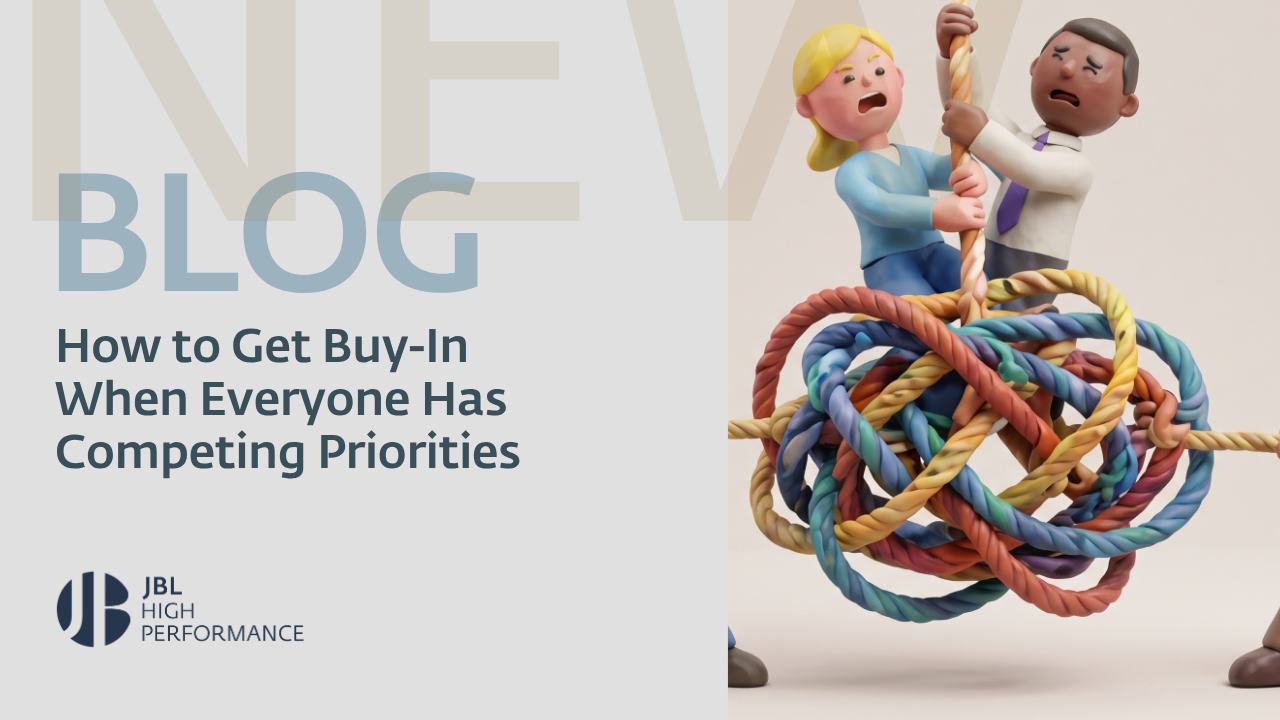
How to Get Voluntary Commitment When Your Project Is Not Their Top Priority
You need something from someone who already has ten things on their plate. Your project is number eleven. It is a position most MDs, GMs and heads of function know well, and it does not matter how senior you are. Getting voluntary commitment from stretched people has nothing to do with your title or where you sit on the org chart.
By Jimmy Burroughes, founder of JBL High Performance. The original version of this article lives at jblhighperformance.com. Updated October 2026.
Think of a project manager in the middle of a company restructuring, no direct reports, working twelve-hour days, trying to get traction from people who are already stretched. I have coached dozens of leaders in exactly that position. The ones who move things forward are not the ones with the biggest job title. They are the ones who have learned how to influence without authority, and that is a practical skill, not a personality trait.
Why Influence Matters More Now
Ten years ago, authority came with your position. Remote work, matrix teams, projects criss-crossing departments have changed that. You're constantly trying to move things forward with people who don't report to you and are already drowning in their own priorities.
Needed marketing sign-off when they're in the middle of a product launch? IT buy-in when they're firefighting system issues? Finance approval when they're closing the quarter? That's the real world.
The leaders who thrive are the ones who've mastered influence when everyone has other priorities.
The BRIDGE Model: Your Framework for Influence
BRIDGE is a practical system for getting things done when you're competing with everything else on someone's plate.
B: Build the Relationship
Think of it like a relationship bank account. You've got to make deposits before you try withdrawals.
Most leaders ask for favours or push deadlines before they've shown any interest in what the other person's dealing with. You can't withdraw what you haven't deposited.
Proactive investment looks like
- Offering to help with someone's backlog
- Listening to what headaches they're facing
- Showing up in their world before asking them to care about yours
Connect with the person, not the position. Get to know them as a human being, not as a job title.
Remote or cross-functional teams make this harder but more vital. Use every touchpoint, whether Slack, Zoom or a coffee chat, to check in. Be specific. Show up for people when there's nothing in it for you. That sticks with people.
Are you the bottleneck?
Take the two-minute assessment and see exactly where work is queueing around you, and what to hand over first.
R: Reciprocity First
You give before you get. It's an unwritten rule that builds influence faster than any org chart.
I remember covering a mate's guard shift during my military days. Long night, everyone exhausted, but you back each other up. When I needed a volunteer for a night op the next week, he stepped up without hesitation.
Look for ways to offer value
- Give someone a lead
- Pick up a tricky task
- Pass praise up the chain on their behalf
Don't fake it. People smell self-interest a mile off. Knowing what matters to them is easier when you've already connected with the person before the position.
I: Identify Their Win
Map where your needs overlap with theirs. A Venn diagram, not parallel lines.
A tech company I worked with had engineering and sales constantly at odds. When they finally sat down and mapped where both sides' pain points overlapped, projects moved twice as fast.
Ask the question: "What's the make-or-break for you on this project?" Then really listen.
What motivates people is rarely money or recognition alone. Sometimes it's learning, autonomy, or avoiding hassle. Often it's about how your project can solve a problem they're already wrestling with.
When everyone has competing priorities, the person who can show how their project helps with existing priorities wins. Figure out what matters to them, then build your bridge from there.
D: Direct With Clarity
If your compass heading isn't clear, you end up adrift. The same goes for influence. You've got to set direction in their language and priorities.
Make it clear
- Specific milestones
- Actual deadlines
- Transparent expectations
I had a client with a cross-functional team pulling in three different directions. We got everyone in a room, laid out the ask, clarified what "done" meant, and hammered down dates. It was about spelling out specifics, then linking those steps to business pain points they actually cared about.
When someone drags their heels, dig into what's holding them back. Usually it's competing priorities. They're worried about other workload or unclear about what's expected. Specificity bridges that gap.
If it's not written, it's not real. Always summarise commitments: dates, owners, what success looks like. That's how you turn talk into action.
G: Get Commitment
Clarity without commitment is just conversation.
After you've been direct, you need explicit agreement. "Sounds good" or "I'll try" doesn't count. You need "Yes, I'll deliver X by Y date."
This is where most influence attempts die. Leaders assume agreement when they've only gotten acknowledgment.
Lock in the commitment
- Confirm specific deliverables
- Agree on timelines
- Identify who owns what
- Document it
When people publicly commit, they're far more likely to follow through, even when other priorities compete for their attention. Get the commitment explicit, get it documented, get it done.
Where is the friction in your team?
The Leadership Friction Finder pinpoints where effort is leaking, so you fix the cause rather than the symptom.
E: Execute and Follow Through
Trust is built or broken based on what you actually deliver.
I ran a milestone sprint with a group that had taken a beating on missed deadlines. We shifted to bite-sized deliverables and celebrated each quick win. Momentum built.
If you said "I'll get this to you by Friday" and it lands Thursday, that's the seed for your next ask, your next bridge.
You'll drop the ball occasionally. When you break a promise, fess up and fix it. That honesty becomes proof that future commitments are worth believing in.
My routine: review my promises at the end of each day, set nudging reminders, and loop back even when it's awkward. The routine keeps you consistent.
When you consistently deliver, your projects start moving up other people's priority lists. They know working with you will solve problems, not create them.
The Reality of Influence
The BRIDGE model is practical, not magic.
Influence is earned. If you want people to prioritise your work when they have ten other things screaming for attention, build trust, offer value, be clear, and deliver.
The leaders who master this build bridges that make people want to help, even when they're busy. They don't sit around waiting for their projects to float to the top of someone else's list.
You're already leading people who have competing priorities. The question is whether you're doing it with any kind of method, or hoping they'll magically find time for your work.
Your BRIDGE Challenge
Pick one relationship where you need someone's time and attention, but you know they're juggling multiple priorities. This week, work through each step of the model:
- Make one deposit in the relationship bank (B)
- Offer value before asking for anything (R)
- Identify what winning looks like for them (I)
- Get clear on your next ask (D)
- Secure explicit commitment (G)
- Deliver on your promise (E)
Track what changes. Most leaders see immediate improvement in cooperation when they stop competing for attention and start building bridges.
What's your biggest challenge getting buy-in when everyone has other priorities? Comment below and I'll share the specific BRIDGE element that addresses it.
Follow for more frameworks that solve real leadership problems without the fluff.
P.S. BRIDGE is one of the core frameworks we teach in Amplify because leading across competing priorities is the reality of modern leadership. Whether you're managing matrix teams, leading cross-functional projects, or driving change when everyone's already overloaded, these frameworks give you the tools to get results. DM me "BRIDGE" for the complete implementation guide.
If this sounds like your week
Your managers are not the problem. They are where the problem is stuck.
When your last leadership spend was signed off, did anyone go back to those managers' bosses and ask what changed? That question is the JBL Outcome Standard, and it is how I work.
- Find the friction. A short diagnostic that shows which decisions are stalling, and at what level.
- Am I the bottleneck? Ten questions on where your week is actually going.
- How I work with GMs. Six weeks, one hour a week, up to twelve of your managers, scored by their own bosses.
- Beat Burnout, Boost Performance. The book.
- The High Performance Leader podcast.
Managers I work with reclaim around four hours a week, and their bosses score the change 8.75 out of 10. Would it be a crazy idea to find out how we did this? Book a scoping call.
Start this week
Busy all day and still behind?
The Quick-Win Pack is five five-minute fixes for the overloaded leader, each built on a framework I use with paying clients. Every fix runs live on the page and hands you a finished, ready-to-use plan in minutes, with no AI account of your own needed. Just $19, and included free with AMPLIFY and the Six Week Reset.
Get the Quick-Win PackQuestions managers ask about this
How can I get buy-in when my project is not a priority?
Focus on building relationships first by understanding what others are dealing with. Offer help and listen to their challenges before asking for support. Identify where your project aligns with their goals and show how it can solve existing problems. Be clear about expectations and secure explicit commitments to move things forward.
What is the best way to influence people with competing priorities?
Use a step-by-step approach: build genuine relationships, give value before asking for anything, find shared benefits, communicate clear deadlines and deliverables, get explicit agreement, and follow through consistently. This method helps you gain voluntary commitment despite their busy schedules.
How do I ensure commitment from team members with full workloads?
After clarifying what you need and setting specific milestones, ask for a clear yes on who will deliver what and by when. Avoid vague responses like 'I'll try.' Document agreements and follow up regularly. Public commitments increase accountability and help maintain progress even when priorities compete.
What should I do if someone delays their part due to other priorities?
Investigate the reasons behind the delay, often competing tasks or unclear expectations. Reiterate specific deadlines and the impact of their work. Adjust plans if necessary but keep communication open. Admit when you miss your own deadlines and fix issues promptly to maintain trust and momentum.
Explore this topic
Hear this discussed on the podcast
Episodes of The High Performance Leader that cover the same ground.

Jimmy Burroughes
FounderFormer British Army officer and corporate GM who has transformed nearly 3,500 managers into leaders across 30+ organisations. Creator of the Simplify to Amplify methodology, author of Beat Burnout, Ignite Performance, and two-time Global Recognition Award winner.
Keep exploring
Want to know where the drag really is?
Before you change anything, get an honest read on the friction slowing your team down. Take a short, free diagnostic and see exactly where the time is going.