Why the Right Management Team Beats the Right Strategy Every Time
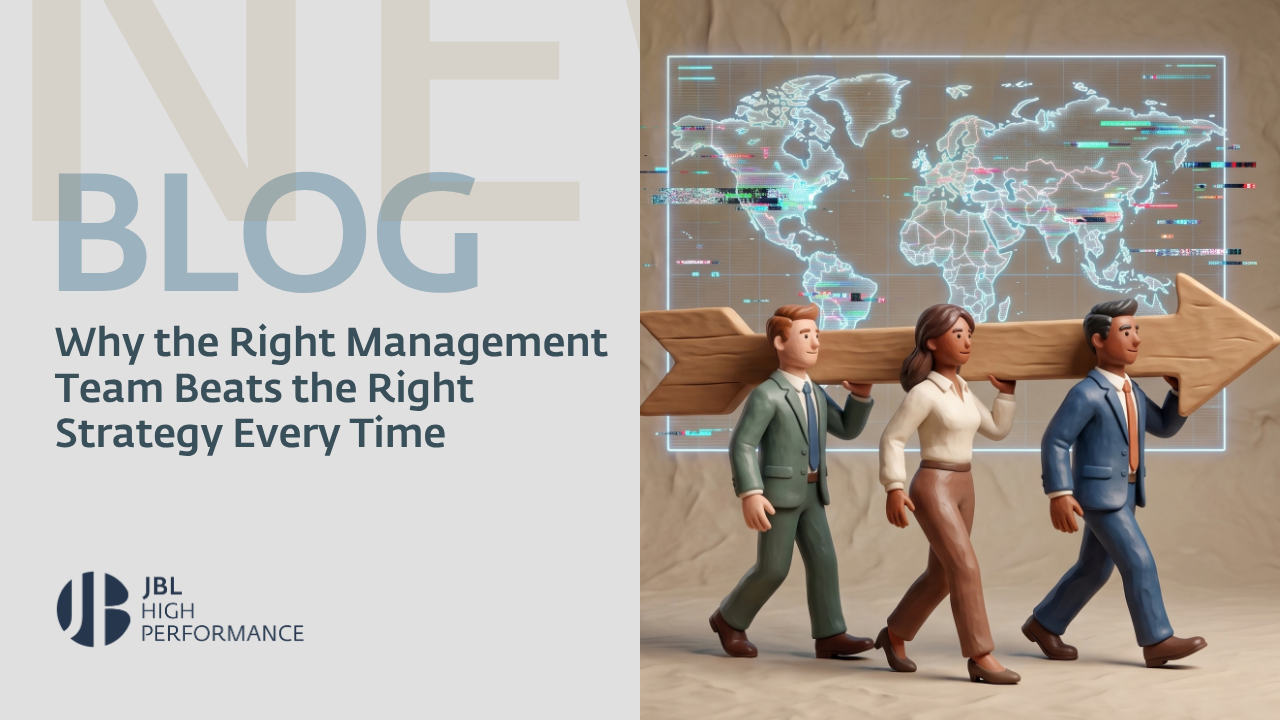
When you move from managing individual contributors to managing managers, the instincts that got you here start working against you. I was reminded of this recently whilst reflecting on one of the most striking leadership lessons I've come across, and it came from an unlikely place: the animation studios of Hollywood.
When Ed Catmull left Pixar to become president of Disney Animation Studios in 2006, he walked into what most would consider a failing management structure. Disney Animation had been struggling for years, with directors clashing, producers overwhelmed, and department heads working in silos. The obvious move would have been to replace the management team and bring in fresh leadership.
Catmull changed how the managers worked together instead.
The Google Principle for Management Teams
What Catmull understood, and what Google's research has consistently shown, is something most senior leaders get backwards:
"If you give an average management team a brilliant strategy, they'll find a way to wreck it. But if you give a brilliant management team an average strategy, they'll find a way to make it work."
The difference lies in the system that governs how they collaborate, not the managers themselves.
At Disney, Catmull didn't replace the directors, producers, or department heads. He imported Pixar's collaborative management model, their "Braintrust" system, where managers could give honest feedback across departments without territorial battles, where psychological safety extended to admitting when projects were struggling, and where the focus was on making the film better rather than protecting departmental budgets.
The same managers who had been "failing" started creating hits. Tangled, Frozen, Moana. These weren't made by different management teams. They were made by the same managers working in a different system.
The Management Layer Challenge
When your management layer is struggling, your first instinct is probably wrong.
You're looking at the individual managers. Who's not developing their people, who's missing targets, who needs performance management. The more useful question is: what's the system doing to these managers?
The moment we shift from "fixing managers" to "fixing how managers work together," everything changes.
I've seen this pattern repeatedly. A management team I worked with recently, where every manager was drowning in their own silo, weren't incompetent people. They were capable managers trapped in a broken system filled with friction.
When we stopped asking "Which manager isn't performing?" and started asking "What's preventing our managers from succeeding together?", the transformation was immediate. They went from competing department heads to a collaborative leadership team.
Are you the bottleneck?
Take the two-minute assessment and see exactly where work is queueing around you, and what to hand over first.
The Three Pillars of High-Performing Management Systems
Based on what Catmull implemented at Disney and what I've observed in high-performing management layers, three elements separate brilliant management teams from struggling ones:
1. Trust: Creating Psychological Safety Across Departments
Managers need to know they can be open about their challenges without career consequences. At Disney, this meant directors could admit when storylines weren't working, and producers could flag budget concerns without blame. When that trust exists, managers ask for help rather than hiding problems until they land on your desk as a crisis.
2. Connection: Building Genuine Relationships Beyond Hierarchy
The shift happens when managers see each other as allies. Catmull created informal spaces where managers could connect as people, not just functional heads. Those relationships become the foundation for collaboration when pressure mounts and silos naturally want to form.
3. Purpose: Aligning Around Shared Outcomes
Every manager at Disney understood they were making films, not running departments. Animation managers cared about story quality; story managers understood production constraints. When managers share a common purpose beyond their functional area, they start solving problems together without being told to.
The Systems Thinking Revolution
This requires a shift in how you think about your role as a manager of managers. You become the systems architect, creating conditions where capable managers can lead effectively together.
Your job is to make the management layer work as a cohesive system that amplifies everyone's effectiveness, not to make each manager better at running their own team in isolation.
Where is the friction in your team?
The Leadership Friction Finder pinpoints where effort is leaking, so you fix the cause rather than the symptom.
Practical Steps for the New Senior Leader
Start with Management Team Dynamics, Not Individual Performance
Before you assess any individual manager, assess how they work together. Are they sharing information and supporting each other's initiatives, or are they protecting their territories?
Create Cross-Functional Success Metrics
Measure managers not only on their departmental outcomes, but on how well they help other departments succeed. This single change transforms behaviour quickly.
Build Management Team Rituals
As Catmull created the Braintrust for creative collaboration, build regular forums where managers can problem-solve together without hierarchy getting in the way.
Focus on Performance Friction in the System, Not People Problems
When performance issues arise, ask: "What friction in our system is creating this outcome?" Most managers are working hard to succeed. More often than not, they're weighed down by:
- Conflicting priorities
- Unclear interfaces between departments
- Redundant processes
- Resource bottlenecks that create drag on their effectiveness
The next time your management team is struggling, resist the urge to focus on individual manager development. Ask yourself: what would happen if I assumed these are exactly the right managers, and I just need to change how they work together as a management system?
The answer might surprise you.
Sometimes the problem lies in the management system, not the managers within it.
If this sounds like your week
Your managers are not the problem. They are where the problem is stuck.
When your last leadership spend was signed off, did anyone go back to those managers' bosses and ask what changed? That question is the JBL Outcome Standard, and it is how I work.
- Find the friction. A short diagnostic that shows which decisions are stalling, and at what level.
- Am I the bottleneck? Ten questions on where your week is actually going.
- How I work with GMs. Six weeks, one hour a week, up to twelve of your managers, scored by their own bosses.
- Beat Burnout, Boost Performance. The book.
- The High Performance Leader podcast.
Managers I work with reclaim around four hours a week, and their bosses score the change 8.75 out of 10. Would it be a crazy idea to find out how we did this? Book a scoping call.
To see how your own management team scores, take the Team Effectiveness assessment. To find where decisions are stalling first, run the friction diagnostic.
Start this week
Busy all day and still behind?
The Quick-Win Pack is five five-minute fixes for the overloaded leader, each built on a framework I use with paying clients. Every fix runs live on the page and hands you a finished, ready-to-use plan in minutes, with no AI account of your own needed. Just $19, and included free with AMPLIFY and the Six Week Reset.
Get the Quick-Win PackQuestions managers ask about this
How can I improve collaboration in my management team?
Focus on creating a system where managers trust each other, build genuine relationships beyond hierarchy, and align around shared outcomes. Establish regular forums for open problem-solving, encourage honest feedback across departments, and measure success by how well managers support each other's goals rather than just individual targets.
Why is fixing how managers work together better than fixing managers?
Individual managers may be capable but trapped in a system that creates friction and silos. Improving how managers collaborate removes barriers, reduces competition between departments, and enables them to solve problems collectively. This shift often leads to better overall team performance than focusing on developing each manager in isolation.
What are key signs my management team is struggling as a system?
Look for managers working in silos, protecting their own territories, avoiding sharing problems, or failing to support other departments. Frequent conflicts, lack of trust, and missed opportunities for joint problem-solving indicate systemic issues. These signs suggest the need to improve how managers interact rather than focusing on individual performance.
How do shared goals help management teams perform better?
When managers focus on common outcomes beyond their departments, they start collaborating naturally. Shared purpose encourages them to prioritize the overall success of the organisation, not just their own area. This reduces territorial behaviour and motivates managers to help each other solve challenges, improving team effectiveness and results.
Explore this topic
Hear this discussed on the podcast
Episodes of The High Performance Leader that cover the same ground.

Jimmy Burroughes
FounderFormer British Army officer and corporate GM who has transformed nearly 3,500 managers into leaders across 30+ organisations. Creator of the Simplify to Amplify methodology, author of Beat Burnout, Ignite Performance, and two-time Global Recognition Award winner.
Keep exploring
Want to know where the drag really is?
Before you change anything, get an honest read on the friction slowing your team down. Take a short, free diagnostic and see exactly where the time is going.