Why Being Easy to Reach Makes Your Managers Ask More
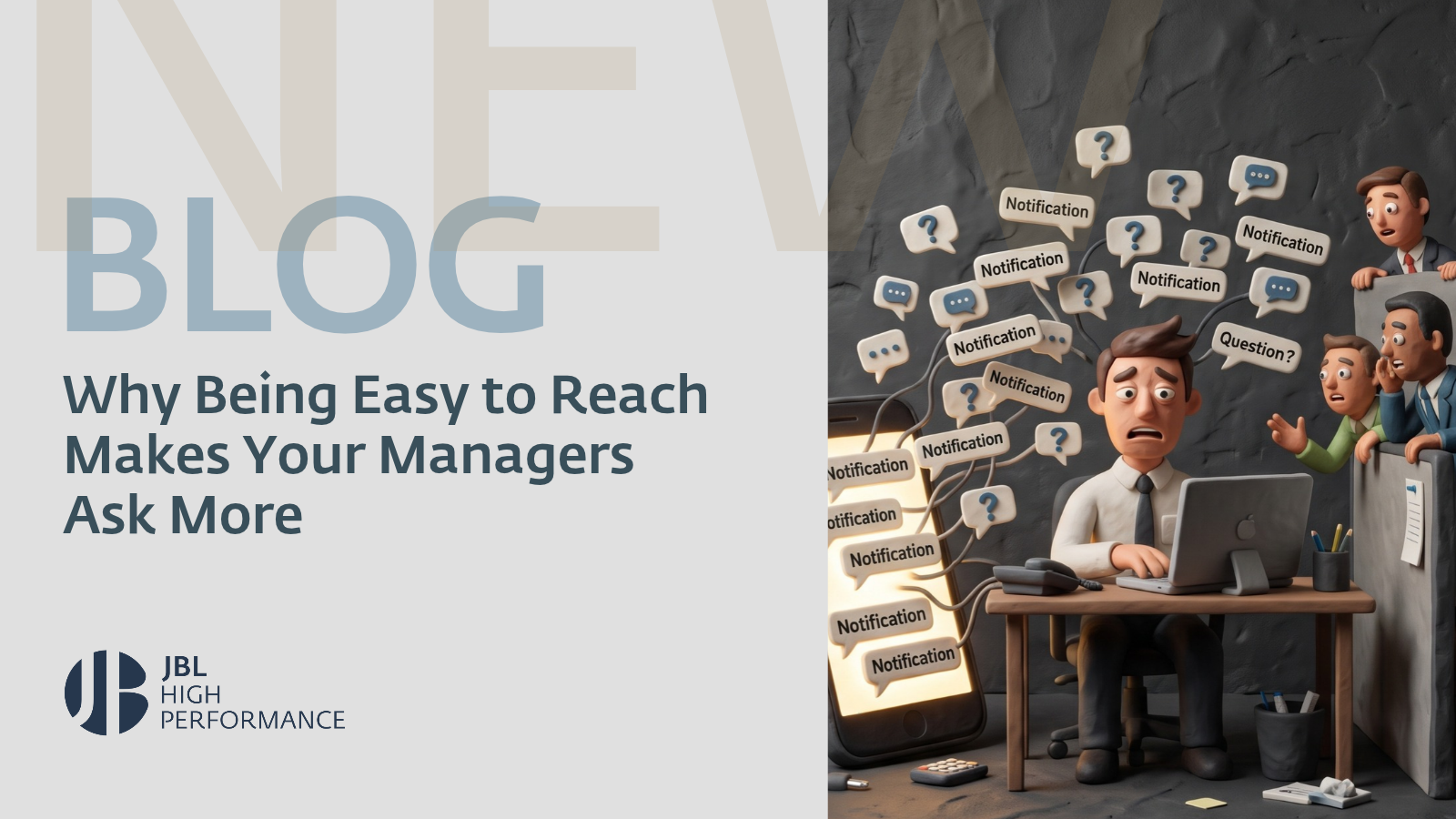
Your phone goes off six times in an hour, and each message is a question one of your managers already has an answer to. You reply to every one of them, because that is what a good boss does.
Most of us were taught exactly that. Doors always open, phone always on, call me if you need me. I used to believe it. Most GMs read the stream of questions as a confidence problem in their managers. The cause is that asking you is the easiest option in the building.
Think of a motorway that jams, so the council adds a lane, and a couple of years later it is jammed again. The name for that is induced demand: make something easier and people do more of it. Your availability is the extra lane. When asking you is instant and free, they ask more, and you can see it in the same few names turning up in your messages all week.
The cost lands in three places. Your managers never build the confidence to make the call themselves, because every reply teaches them that asking is cheaper than deciding. You lose the thread of whatever you were doing, and the strategic work only you can do keeps waiting. The business waits as well, because decisions queue behind your reply instead of being made where the work is.
Take one message. A manager wants to move a supplier delivery to Thursday. She is sure it is fine, but you are right there, so she messages you for top cover. You are in the middle of something that needs your full attention. You stop, say yes, and go back to it. It took a minute, but you have lost your place, and she has learned that asking you is easier than deciding herself. Now picture six of those back to back. Each one costs her nothing and costs you your train of thought.
At the start of the AMPLIFY programme we create capacity first, and part of that is being less available. At Tatua, a $560M dairy manufacturer, managers self-reported around four hours a week back and 40% more decisions made at the right level. Their own bosses, seeing it first-hand, rated fewer escalations and better decisions at 3.0 out of 4.
Two changes work this week. The first is a three-column conversation with each manager. In the first column goes what they can decide without telling you, in the second what they can decide and then tell you about, and in the third what they bring to you before they decide. Once that is agreed, the messages fall, because they know which decisions were always theirs.
The second is a different answer to the question. When someone asks what to do, reply with “What do you suggest?” and wait. Most of them already know the answer and want top cover. If you leave it for an hour, the time pressure on them does the work and many decide for themselves. When you get back to them, say “I saw this after my meeting. What did you decide?” Some will have sorted it out already.
If you are not sure this is happening to you, keep a note in your phone for a week. Log every question: who asked and how many times in a day. The same few people will show up, and so will the number of times you were pulled away from what you were doing. You will know the extra lane is closing when those names appear less in your notes and the messages that do arrive tell you what was decided instead of asking what to do.
If useful, the full conversation is Episode 62 of The High Performance Leader, on the podcast site, Spotify and Apple Podcasts.
Jimmy Burroughes is the founder of JBL High Performance.
Start this week
Busy all day and still behind?
The Quick-Win Pack is five five-minute fixes for the overloaded leader, each built on a framework I use with paying clients. Every fix runs live on the page and hands you a finished, ready-to-use plan in minutes, with no AI account of your own needed. Just $19, and included free with AMPLIFY and the Six Week Reset.
Get the Quick-Win PackExplore this topic

Jimmy Burroughes
FounderFormer British Army officer and corporate GM who has transformed nearly 3,500 managers into leaders across 30+ organisations. Creator of the Simplify to Amplify methodology, author of Beat Burnout, Ignite Performance, and two-time Global Recognition Award winner.
Keep exploring
Want to know where the drag really is?
Before you change anything, get an honest read on the friction slowing your team down. Take a short, free diagnostic and see exactly where the time is going.