Are You Swimming Against the Current? What I Realized & Changed.
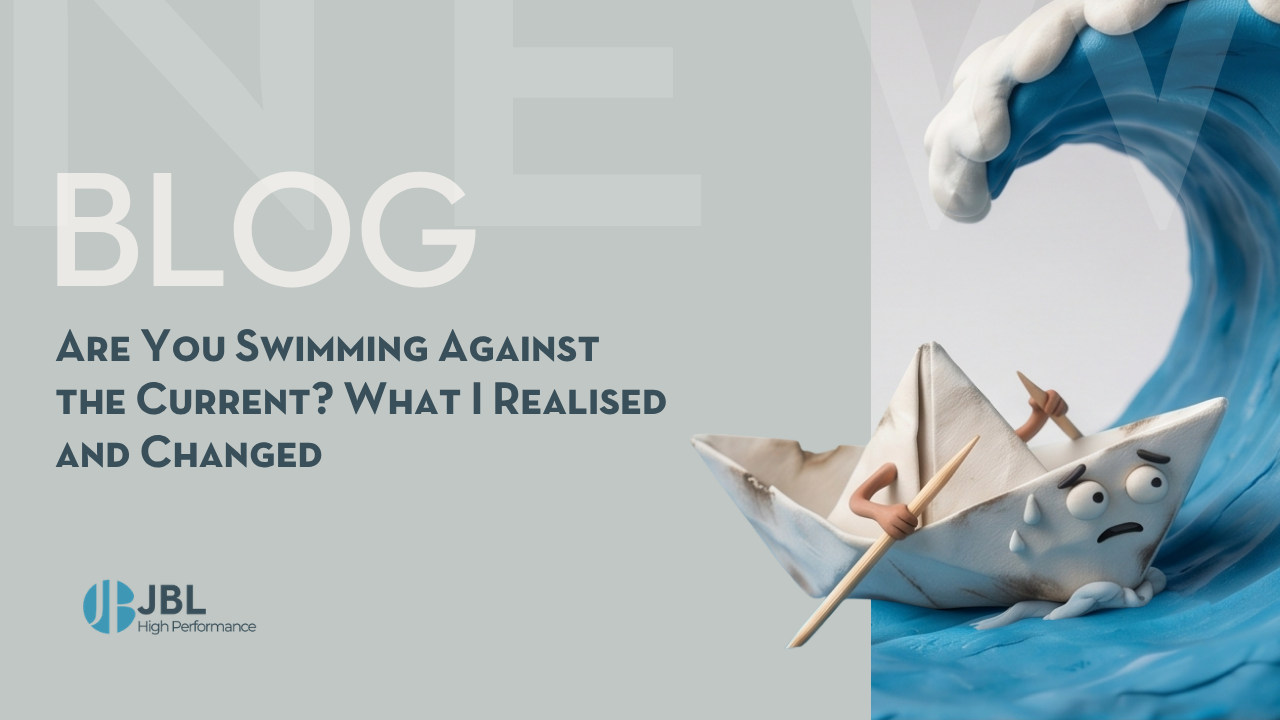
One of the things that have been top of mind for me is how and where I use my energy. A while back I found myself feeling quite fatigued, and so I spent some time reflecting on it. Here's what I came up with, and why I think it applies to most leaders right now.
The Adrenal Slump and the Cost of Constant Activity
Carl Sanders Edwards once spoke at one of Jumpshift's "Morning Tea with Mark" sessions about the adrenal slump. As somebody who likes to be busy and feel useful and involved, I found myself spending a lot of energy doing "activity". Whether that be attending meetings, reaching out to people for coaching and mentoring, or simply trying to find a way around whatever the current obstacle happened to be. As a result, I was feeling some fatigue creeping in.
Whilst I have been making some great progress, it hasn't all gone well. As someone who has nearly always been able to push through just about any challenge through sheer force of will, I have had to approach things a little differently. The good news is, I've been able to bottle that "difference" into something which hopefully connects with others too.
The River Model: Four States of Being
I put a model together a couple of years ago when I was coaching overseas. It talks about four different states of being, measured on two axes. Our existence is like us being in a fast-flowing river. The axes are our effort versus our sense of control toward our goals.
I reflected that I had been spending an awful lot of energy swimming against the current. And the current, at certain points in any leader's journey, is in the midst of a flash flood, with an inevitable extra volume and pressure that even the strongest swimmer might find challenging.
After a number of conversations with clients and other mentors about what was a struggle right now, I concluded it was utterly okay to just float for a short while.
Floating: Letting Go of Control
Floating allows us to be swept along with the current and recover some energy. The critical piece for me was giving up a sense of control about where I was headed, whilst the current was too much to resist. Floating requires us to accept and be comfortable that we are going to be going in the same direction as everyone else for a bit, and that we are not in control.
The danger, of course, is that we are floating down a river with no visibility of what's ahead, and so when a submerged hazard, a rapid or a dangerous waterfall appears, it can come as a surprise. So whilst floating, we need to still be thinking.
Treading Water: Regaining Control
We then want to gradually move from floating to treading water. Treading water is us being back in more control, with our head up, looking around, making a plan for a future swim, and then setting off swimming against the current when the moment is right.
After the Rapids, You Are Somewhere New
This is worth sitting with. A river only flows in one direction, downstream. Calmer water doesn't mean you're back where you started before the rapids. You are further downstream, surrounded by a different landscape. The belief that things will simply revert to how they were is, in my experience, a fallacy. What follows a period of intense pressure is not a return to normal. It is a new set of conditions that requires fresh thinking.
Why This Model Matters for Leaders
It struck me that this model is one I should be sharing more widely, to help other leaders put themselves into one of the four quadrants and consider the positive and negative consequences of their current situation.
We all have different energy levels and swimming ability at any given moment. It makes sense to keep our heads up and marshal reserves of energy for when we make that burst towards the bank, or the big push towards safety.
The secret of success in any new landscape will be the result of great choices and actions made now, not frantic activity. My belief is that constantly swimming against the current will not lead to success.
Where is the friction in your team?
The Leadership Friction Finder pinpoints where effort is leaking, so you fix the cause rather than the symptom.
Your Team Is in the River Too
It is easy, when you are focused on your own energy and direction, to forget that every person on your team is navigating the same current. Some have been exhilarated by the challenge. Others have been terrified. Some have swallowed water and need immediate assistance. Like a good white water rafting coach, you want to check in and make sure everyone made it through unscathed before you push hard again.
Team members who have been grinding through high intensity and stress, adjusting to new circumstances while managing all manner of personal pressures, are not simply ready to sprint the moment calmer water appears. Some will be so tired that they are effectively drowning and simply need support to get back to positive action.
Good leaders hold space for the emotional strain employees have experienced alongside the commercial pressures on the business, whether that is in a group setting or one on one. Ask your team members to reflect on what they have experienced. It gives both you and them greater insight into their level of resilience or fragility before you push back into delivery. Run that reflection as a structured conversation and give your team the questions in advance. My current reflection and one to one templates sit in the free resources library, including four simple questions to sharpen your one on ones.
The Hidden Costs of Ignoring the Transition
There will be some team members who fear walking back into full pace and hearing their leader say, in effect, "You've had a break, let's just get back into it, we've got time to make up for." The words might not land exactly like that, but the imagined implication, and the sense that their effort has been overlooked, sits high on their anxiety radar.
These figures from Perceptive are worth paying attention to. Well-being is affected by how leaders respond during and after periods of intense pressure.
- Almost a quarter of employees believe their employer hasn't done enough to support them.
- Just under half hold a changed perspective of their employer. Of this group, two thirds feel more positive while the remainder are less favourable.
- Over a third of employed New Zealanders are either considering a career change or are unsure whether they will stay with their current employer.
- Of those who are definitely changing their career, three out of five are not confident they will be able to make the transition.
With one in three employees considering a career change, this may also be the moment for leaders to examine how their business might adapt to allow aspirational people to migrate their careers and stay. CEB figures put the cost of replacing an employee at between 140 and 260% of their salary, so retaining people by letting them work more flexibly on things they care about makes commercial sense.
Leading Through a VUCA Environment
In employees' minds, they may be experiencing what I'd call Ultra-VUCA: an extreme version of Volatility, Uncertainty, Complexity and Ambiguity. The often quoted, often misused phrase "VUCA" suggests that everything is in chaos and that we and our teams have little power to do anything about it strategically, that we are only reactive. That is not the case. There are two axes in the VUCA model.
- How well we can predict the results of our activities.
- How much we know about the situation we are facing.
Even when we don't know much and can't predict much, we can still lead proactively. The key is to be honest with your team about what you know and what you don't, and to keep making decisions rather than waiting for certainty that may not arrive.
Beat burnout before it beats your team
Beat Burnout, Ignite Performance is the practical playbook for protecting your energy and your people.
New Dynamics That Demand Attention
As conditions shift and teams reconfigure, a new set of practical challenges tends to emerge that leaders underestimate.
Blended and Mixed-State Teams
When some people are working in a shared space and others are not, you create a new dynamic of mixed-state teams. How do you conduct a meeting when half the people are in the room and half aren't? Inevitably those physically present can read the room and interact more readily. Those not present may struggle to get their viewpoints across or offer interjection at opportune moments. This requires strong communication and an inclusive organisational culture.
The Risk of Proximity Bias
Leaders who default to solving problems with whoever is physically closest risk excluding the very people whose perspective matters most. There will be occasions where the people in the room are simply not the right people. Those not in the room may feel deliberately isolated from proceedings, intentionally or not. Being conscious of this bias is not a soft consideration. It is a practical one with direct consequences for decision quality and team cohesion.
Those Who Cannot Return
Some team members may not be able to return to a shared space at all, due to childcare responsibilities or other personal circumstances. These people can end up feeling left out or, worse, quietly disadvantaged as everyone else settles back in. Leaders must actively work against that drift.
Autonomy and the Desire for a New Way of Working
Others may have genuinely thrived with greater autonomy and will find it difficult if old management styles are simply reapplied. Their eyes have been opened to a different way of working. If that is not acknowledged, you risk losing some of your most capable people to organisations that will accommodate it.
Knowing When Resistance Is Draining You
While swimming against the current is sometimes framed as a form of individuality or determination, it is important to recognise when that resistance is simply draining your resources without moving you forward. True originality and strategic thinking require energy. Constant struggle without strategy consumes it.
Embracing your autonomy as a leader doesn't mean taking unnecessary risks or engaging in endless opposition to circumstances you cannot control. It means reading the river accurately, choosing your moments, and leading your team with enough in reserve to matter when it counts.
The approach that will serve you and your team best over the long term is less about getting back to normal and more about meeting the new landscape with fresh thinking, in ways that support and encourage people as they transition to whatever comes next.
From the YouTube channel
Watch: more on this topic
A video from the JBL High Performance YouTube channel that goes deeper on the ideas in this article.
Putting my energy in the right places | Jimmy Burroughes
Start this week
Busy all day and still behind?
The Quick-Win Pack is five five-minute fixes for the overloaded leader, each built on a framework I use with paying clients. Every fix runs live on the page and hands you a finished, ready-to-use plan in minutes, with no AI account of your own needed. Just $19, and included free with AMPLIFY and the Six Week Reset.
Get the Quick-Win PackQuestions managers ask about this
How can I manage fatigue without pushing harder at work?
Instead of pushing harder, recognise when energy is low and accept a reduced sense of control temporarily. Allow yourself to 'float' by moving with the current and conserving energy. Use this time to recover and observe before planning your next steps. This prevents burnout and prepares you to act effectively when conditions improve.
What does it mean to 'float' in a leadership context?
'Floating' means accepting that you cannot control every outcome and moving with external pressures rather than against them. It involves conserving energy, staying alert to changes, and preparing to act when the situation allows. This approach helps maintain mental clarity and prevents exhaustion during challenging periods.
How do I know when to stop struggling against challenges at work?
When constant effort feels draining and progress stalls despite pushing harder, it may be time to stop swimming against the current. Recognise signs like persistent fatigue or setbacks. Instead, shift to a state of observation and recovery, conserving energy until you can plan and execute a more effective course of action.
What practical steps can help leaders regain control during uncertainty?
Start by assessing your current state honestly. If you are overwhelmed, allow yourself to 'float' and conserve energy. Keep your head up, observe your environment, and look for opportunities to regain direction. Gradually move to 'treading water' by planning carefully before making deliberate moves towards your goals.
Explore this topic
Hear this discussed on the podcast
Episodes of The High Performance Leader that cover the same ground.

Jimmy Burroughes
FounderFormer British Army officer and corporate GM who has transformed nearly 3,500 managers into leaders across 30+ organisations. Creator of the Simplify to Amplify methodology, author of Beat Burnout, Ignite Performance, and two-time Global Recognition Award winner.
Keep exploring
Want to know where the drag really is?
Before you change anything, get an honest read on the friction slowing your team down. Take a short, free diagnostic and see exactly where the time is going.