Why You Are the Reason You Never Switch Off and How to Fix It
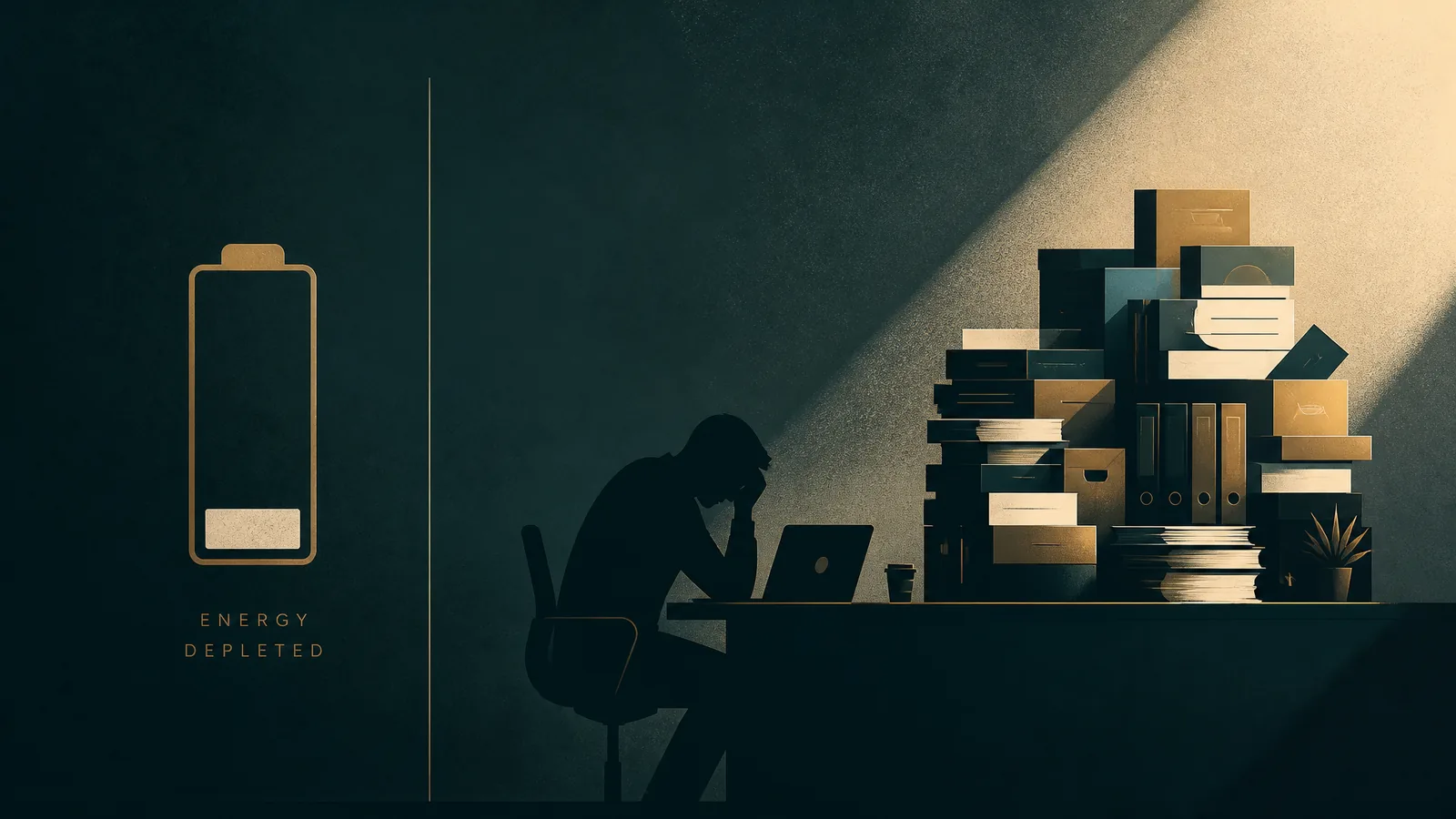
For the last 10 weeks, we have taken you on a journey through the 5 factors which prevent burnout. We put them together through undertaking extensive research interviewing and workshopping over 1,300 leaders across multiple organisations, and we came up with a simple mnemonic: PACED.
So this week, for the last blog of the year, we are discussing downtime.
Why Downtime Matters
Downtime comes in many forms: working a 4-day week, actually using your paid vacation time, not working at weekends, or just leaving your phone in the kitchen when you go to bed. All are essential to your mental health and performance, and too many of us give them away.
When coaching leaders, we frequently discuss the choice that they are making by devaluing their personal time for work. Over time this creep on your downtime means you are sacrificing friends, partners, hobbies, and fitness and health. We can struggle to see it happening. When you say yes to work, what are you saying no to?
We seem compelled to give away our downtime because of a mix of intrinsic factors such as ambition, super-hero syndrome, or the next bonus. Perhaps it is down to performance anxiety, a feeling of guilt if others are working, or a desire to prove we are important or relevant.
Countless articles and research papers have shown that working more than 8 hours a day or 60 hours per week actually sees a decline in performance.
It seems simple when we look at it like that, right? Work always seems to win. The reality is, though, as much as we might try to convince ourselves and others that we are being productive by dedicating these long hours, we actually are not.
Let us look at the different downtime devils that take you away from your precious downtime and recovery, and suggest some ideas to help you do something about it.
The "Always On" Leader
Are you the always-on leader? You do not want to switch off because you feel the need to be hyper-responsive and seen to be super-efficient? The opposite is the reality. In studies of leadership competence, leaders working more than 80 hours per week were seen to be less effective than those working 60 hours per week or less, due to a perceived lack of prioritisation skills and leadership capability.
Overworkers are less adept at dealing with ambiguity and taking perspective because they are exhausted and running on fumes all the time. Their teams tended to experience higher levels of burnout too, because there are unwritten expectations that if the boss is online, everyone else needs to be, which keeps on feeding the machine with even more data points. In short, you are not helping anyone.
The Angel Solution
- Try setting the example by shutting off emails and phone calls outside of work hours. The more senior you are in an organisation, the more impactful this becomes, but it works at every level.
- Work with your team to ensure they are aware that you are not expecting them to be online or available outside of their normal hours, even if they see things from other people arriving.
- Slow the tempo. We live in a 24-hour world and people are increasingly working in different time zones. That does not mean we all need to work 24 hours a day.
- Aim to finish your day at the same time with a delineated transition. It might be the commute home or it might be closing the laptop to go for a walk.
The "I Want to Be More Strategic but Am Just So Busy" Leader
Are you one of the many leaders who are struggling with being overworked and also clamouring to get out of the weeds and be strategic? The truth is, the more burned out we are, the less able we are to see the difference between the importance of priorities, so we try to deal with all of them. We are simply playing whack-a-mole and never have downtime. Then we work harder and longer to try and deal with all the things on our plates versus sitting back and working on the most important things.
The only person who can make you more strategic is you. And strategy is about making choices: what to work on, when to work, and when to rest.
The Angel Solution
In one client project, we encouraged every leader in the programme to take a notepad and pen and go somewhere else, outside of their workspace, to sit alone and think for 45 to 60 minutes once a week. These were leaders with teams of several thousand staff each, so they were extremely busy people, but they committed to it. This one practice was the single thing in the post-engagement feedback that they attributed to improving their performance, choices, and level of perspective. They created headspace to actually look at the issues versus being immersed in them.
Are you the bottleneck?
Take the two-minute assessment and see exactly where work is queueing around you, and what to hand over first.
The Substance User and Abuser
Perhaps you are the leader who starts every day with a bucket of coffee, or ends every day with a glass (or bottle) of wine to switch off, or takes sleeping tablets, or other things. Many people use stimulants to wake up or depressants to wind down because they are not creating space for that to happen naturally.
Alcohol does help slow the brain down initially, but the chemicals in alcohol actually interrupt restorative sleep, are toxic, and are needed in increasing amounts to get the same effect. The biological breakdown products of both caffeine and alcohol increase anxiety and depression, and both cause the production of more cortisol, the stress hormone responsible for a host of negative long-term health consequences.
The Angel Solution
- Start and finish your day with on-ramp activities that allow you to warm up your brain and use natural chemistry versus substances to get you moving.
- Close out the day with less stressful off-ramp activities like admin tasks that do not require your full intellect, instead of pouring that glass of wine.
- Explore creative downtime habits where you are using a different part of your brain, such as cooking, painting, or jigsaws, versus consumptive habits like drinking, drugs, or television. It helps to activate the right brain hemisphere and allows the waste products of overthinking and overworking to be flushed out.
The "I Forgot My Healthy Habits" Leader
Closely related to the substance user and abuser is the leader who stopped working out, eating well, and parked all their healthy habits. They have resorted to cheat meals and fast food whilst watching their waistline gradually increase in size. Losing healthy habits also reduces your resilience, or ability to bounce back from stress, effectively stealing downtime.
We are what we eat. The science shows that leaders operating beyond the normal 40 to 50 hour week are in the stress zone. This makes the body produce hormones that harden arteries, clog veins, and increase the chances of cardiovascular issues. Adding saturated fats and processed foods that contain chemicals which inhibit brain function exacerbates dementia and cognitive decline, and can lead to brain fog. If you are tempted to use that bar of chocolate to boost your blood sugar, you also get into the realm of glucose crashes which over time can lead to diabetes.
The Angel Solution
Exercise removes stress hormones and waste products from the brain and helps you act with more focus. Even a brisk 15-minute walk will clear your head more than a coffee or a chocolate bar. There are plenty of prepared meal and meal box options in just about every country that reads this blog, so look into healthy, tasty options and get that exercise back into the schedule.
Where is the friction in your team?
The Leadership Friction Finder pinpoints where effort is leaking, so you fix the cause rather than the symptom.
The Superhero Leader
Are you the leader who believes only you have the answers or can solve the toughest problems? If so, you are taking away opportunities for others in your team to develop and shine, meaning you will still be the only person everyone relies on during your after-hours, weekends, vacations, and time off.
The Angel Solution
- Switch your energy to developing high-potential employees to learn how things are done. Coach them versus doing it yourself, and watch the bench strength of your team improve.
- Remember that superheroes have to choose who to save. They cannot be everywhere all at once.
- Focus your energy on prioritising your skills and talents where only you can be, whilst letting others learn and grow to take care of things that you can oversee but not necessarily be involved in.
Superheroes have to choose who to save. They cannot be everywhere all at once.
Making the Most of Your Downtime
There is no judgement in any of these downtime devils. The key is to try and make the best use of the downtime opportunities we have coming up over the festive break. There might be one or more devils which affect you more, that you can squish whilst tucking into turkey. The key is how you can continue those habits when you come back in 2023 and block out moments now to maintain when you return.
Wishing you a very Merry Christmas and Happy New Year, filled with more downtime and less burnout.
If this sounds like your week
Your managers are not the problem. They are where the problem is stuck.
When your last leadership spend was signed off, did anyone go back to those managers' bosses and ask what changed? That question is the JBL Outcome Standard, and it is how I work.
- Find the friction. A short diagnostic that shows which decisions are stalling, and at what level.
- Am I the bottleneck? Ten questions on where your week is actually going.
- How I work with GMs. Six weeks, one hour a week, up to twelve of your managers, scored by their own bosses.
- Beat Burnout, Boost Performance. The book.
- The High Performance Leader podcast.
Managers I work with reclaim around four hours a week, and their bosses score the change 8.75 out of 10. Would it be a crazy idea to find out how we did this? Book a scoping call.
#blog #waysofworking #jimmyburroughes #jimmybleadership #gamechangingdevelopment #leadershipcoaching #culturechange #businessresults #fastgrowth #highperformanceleader #gamechangingleadership #leadershipdevelopment #mindsetcoach #motivation #success #beabetterleader #mindset #growthmindset #personaldevelopment #burnout #trust #connection #performance #Leadership Development tips and ideas
From the YouTube channel
Watch: more on this topic
A video from the JBL High Performance YouTube channel that goes deeper on the ideas in this article.
The secret the top 1% of leaders use to sleep better and be more impactful.
Start this week
Busy all day and still behind?
The Quick-Win Pack is five five-minute fixes for the overloaded leader, each built on a framework I use with paying clients. Every fix runs live on the page and hands you a finished, ready-to-use plan in minutes, with no AI account of your own needed. Just $19, and included free with AMPLIFY and the Six Week Reset.
Get the Quick-Win PackQuestions managers ask about this
How can I stop feeling the need to be always available at work?
Set clear boundaries by switching off emails and phone calls outside work hours. Communicate to your team that you do not expect them to be online beyond their normal working times. Create a consistent end-of-day routine that signals a transition away from work, such as closing your laptop or taking a walk. This helps reduce pressure on both you and your team.
What is a practical way to become more strategic as a busy leader?
Dedicate 45 to 60 minutes once a week to sit alone away from your workspace and reflect. Use this time to prioritise and think about the most important issues rather than reacting to every task. This practice helps create mental space, improves decision-making, and shifts focus from firefighting to strategic planning.
Why is relying on coffee or alcohol to manage work stress harmful?
Caffeine and alcohol disrupt natural brain chemistry and sleep quality. They increase anxiety, depression, and stress hormone levels, which can harm long-term health and reduce performance. Using these substances to wake up or wind down prevents your brain from recovering naturally, making stress and fatigue worse over time.
What are healthier ways to switch off after work?
Use calming off-ramp activities that require less mental effort, such as doing admin tasks or light chores. Engage in creative hobbies like cooking, painting, or puzzles to activate different parts of your brain. Avoid consumptive habits like drinking alcohol or watching TV, as these do not provide genuine mental rest or recovery.
Explore this topic
Hear this discussed on the podcast
Episodes of The High Performance Leader that cover the same ground.

Jimmy Burroughes
FounderFormer British Army officer and corporate GM who has transformed nearly 3,500 managers into leaders across 30+ organisations. Creator of the Simplify to Amplify methodology, author of Beat Burnout, Ignite Performance, and two-time Global Recognition Award winner.
Keep exploring
Want to know where the drag really is?
Before you change anything, get an honest read on the friction slowing your team down. Take a short, free diagnostic and see exactly where the time is going.