Why Newly Promoted Leaders Struggle and How to Fix It Early

Being Promoted to Senior Management and Being Told You’re Not Stepping Up
You worked hard for the promotion. You earned it. But now you're in the role and, instead of feeling in control, you're overwhelmed, constantly behind, and doubting yourself more than ever. That is not a personal failing. It is one of the most common and least talked about problems in senior management.
The gap between being a good manager and functioning effectively as a senior leader is bigger than most organisations admit. The skills that got you promoted are not the same ones you need now, and almost nobody tells you that clearly enough, or early enough, to make a difference.
This piece sets out why that gap exists, what it costs you if you ignore it, and what actually needs to change.
The Crushing Reality
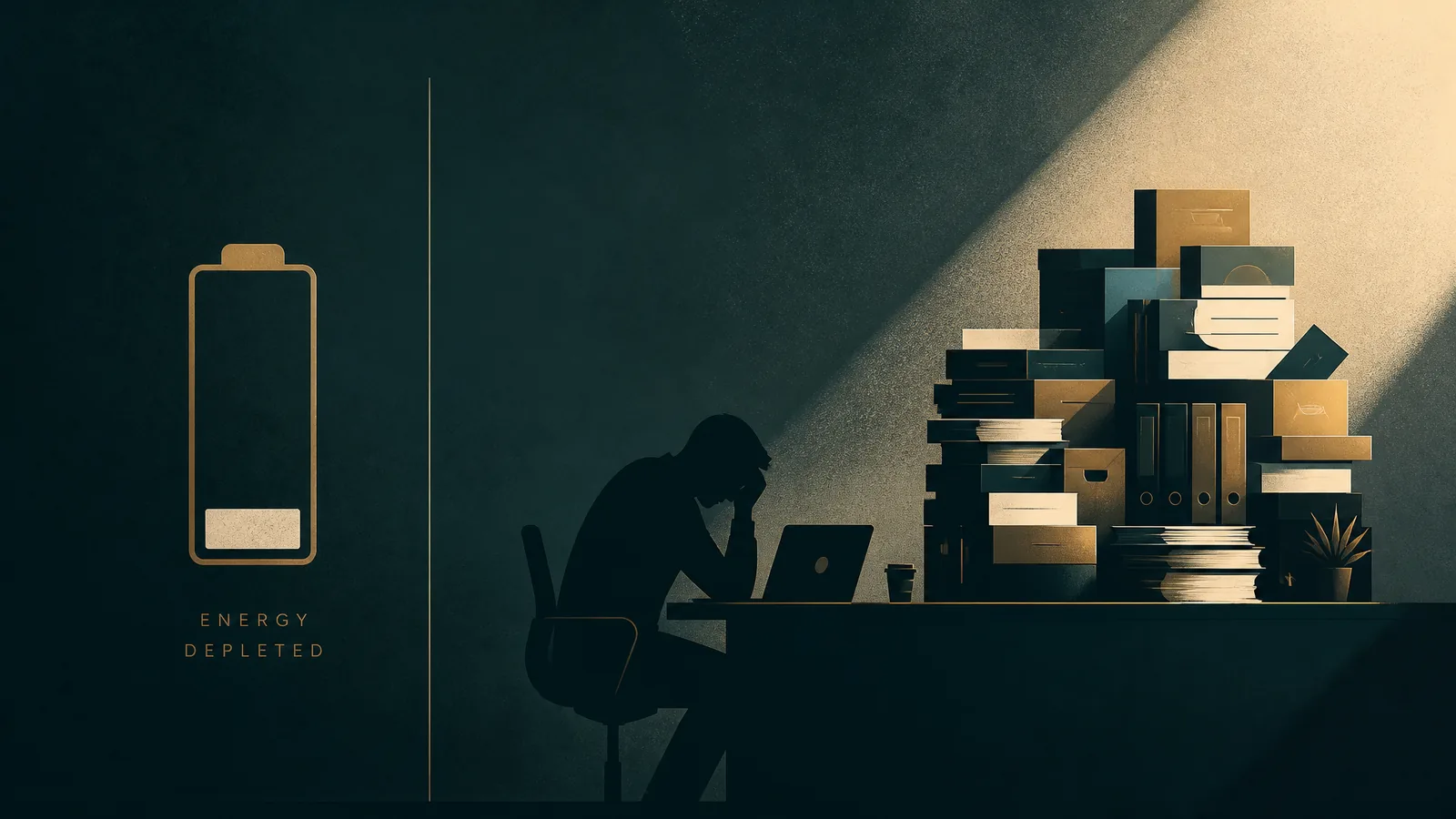
Once the initial excitement of the promotion fades, the reality of your new responsibilities sets in. Suddenly, you’re swamped with more tasks than you can handle. Your inbox is overflowing, your calendar is packed with back-to-back meetings, and every decision you make feels like it could make or break your career. You spend as much time managing other people’s feelings and egos as you do on your actual job.
Then comes the feedback. Your boss sits you down and tells you that you “need to step up”. You’re not meeting expectations, and worst case, if things don’t change, there could be consequences. It’s like a punch to the gut. You thought you were doing everything right: working harder, putting in more hours, taking on every task. But it’s not enough. You’re not enough. But you don’t know how to be enough.
The Emotional Toll
Feelings of inadequacy might start to creep in. Self-doubt becomes a new companion. You replay the feedback over and over in your mind, wondering where you went wrong. What you could or should have done differently. The weight of expectations looms, and you’re terrified of failing. The pressure to prove yourself is immense, but the harder you push, the more it seems to backfire.
As a senior manager, you’re expected to be an expert in leadership and help inspire your team. But you know you’re struggling.
You feel isolated. You don’t want to show weakness or admit that you’re overwhelmed, so you keep it all inside and do your best. The stress starts to take a toll on your health and well-being.
- You’re not sleeping well.
- Your eating habits have deteriorated.
- You can’t remember the last time you truly relaxed.
Are you the bottleneck?
Take the two-minute assessment and see exactly where work is queueing around you, and what to hand over first.
The Coping Cycle
You double down on your efforts, hoping that working even harder will turn things around. You stay late at the office, cancel plans with friends and family, and sacrifice personal time in the name of work. You hear yourself saying things like “If we can just get through this week, month, quarter”. But no matter how many hours you put in, it never feels like enough. You’re constantly behind, constantly firefighting, and constantly exhausted.
Every email, every meeting, every task feels urgent and critical. You’re caught in a cycle of reaction, always putting out fires and never having time to think strategically. The more you try to control everything, the more chaotic it becomes.
You’re spread so thin that you can’t give anything the attention it deserves, and the quality of your work starts to suffer.
The Personal Sacrifice
Your personal life begins to suffer too. The long hours and constant stress leave little time for anything else. You miss important family events, neglect your hobbies, and lose touch with friends. The things that used to bring you joy and balance are pushed aside, and you’re left feeling unfulfilled and disconnected.
The guilt sets in. You feel guilty for not being there for your loved ones, for not taking care of yourself, for not being able to handle it all. The boundaries between work and life blur, and you’re always on, always thinking about the next task, the next meeting, the next problem to solve.
Where is the friction in your team?
The Leadership Friction Finder pinpoints where effort is leaking, so you fix the cause rather than the symptom.
The Reason Why
The reason you’re feeling this way is that you’re still operating like a manager, not a senior leader. It might be one rung on the company ladder but it might as well be Mars.
Senior management isn’t about doing more tasks. It’s about leading differently. This transition requires a whole set of new skills and ways of working that aren’t often shared in traditional management and leadership training.
To thrive, you need to shift from managing tasks to leading people. That means:
- Thinking strategically rather than reactively.
- Empowering your team effectively.
- Inspiring those around you.
- Cultivating innovation and setting a vision for the future.
The Path Forward
Recognising the need for this shift is the first step. If you’re feeling like this, I get it. I wrote this journal entry six years ago as part of an assignment. I also worked out how to solve it and I’d love to help.
If this sounds like your week
Your managers are not the problem. They are where the problem is stuck.
When your last leadership spend was signed off, did anyone go back to those managers' bosses and ask what changed? That question is the JBL Outcome Standard, and it is how I work.
- Find the friction. A short diagnostic that shows which decisions are stalling, and at what level.
- Am I the bottleneck? Ten questions on where your week is actually going.
- How I work with GMs. Six weeks, one hour a week, up to twelve of your managers, scored by their own bosses.
- Beat Burnout, Boost Performance. The book.
- The High Performance Leader podcast.
Managers I work with reclaim around four hours a week, and their bosses score the change 8.75 out of 10. Would it be a crazy idea to find out how we did this? Book a scoping call.
Start this week
Busy all day and still behind?
The Quick-Win Pack is five five-minute fixes for the overloaded leader, each built on a framework I use with paying clients. Every fix runs live on the page and hands you a finished, ready-to-use plan in minutes, with no AI account of your own needed. Just $19, and included free with AMPLIFY and the Six Week Reset.
Get the Quick-Win PackQuestions managers ask about this
Why do newly promoted leaders often feel overwhelmed and exhausted?
Newly promoted leaders often feel overwhelmed because their role shifts from managing tasks to leading people, requiring new skills like strategic thinking and inspiring teams. They face increased responsibilities, constant urgent demands, and pressure to perform without clear guidance on how to manage these changes effectively.
How can senior managers avoid getting stuck in constant firefighting?
Senior managers can avoid constant firefighting by shifting focus from reacting to daily tasks to thinking strategically. This involves identifying decision bottlenecks, delegating effectively, and creating space for planning and leadership, rather than trying to control every detail and doing all the work themselves.
What causes the gap between expectations and performance for new senior leaders?
The gap arises because new senior leaders often continue working like managers, focusing on tasks rather than leading differently. They lack training in strategic leadership skills, which leads to falling short of expectations despite working harder and longer hours.
How does poor work-life balance affect newly promoted leaders?
Poor work-life balance leads to stress, burnout, and declining health for newly promoted leaders. Long hours and constant pressure cause them to miss personal events, neglect hobbies, and feel isolated. This imbalance reduces their effectiveness and satisfaction both at work and home.
Explore this topic
Hear this discussed on the podcast
Episodes of The High Performance Leader that cover the same ground.

Jimmy Burroughes
FounderFormer British Army officer and corporate GM who has transformed nearly 3,500 managers into leaders across 30+ organisations. Creator of the Simplify to Amplify methodology, author of Beat Burnout, Ignite Performance, and two-time Global Recognition Award winner.
Keep exploring
Want to know where the drag really is?
Before you change anything, get an honest read on the friction slowing your team down. Take a short, free diagnostic and see exactly where the time is going.