Why Telling a Manager to Be More Strategic Changes Nothing
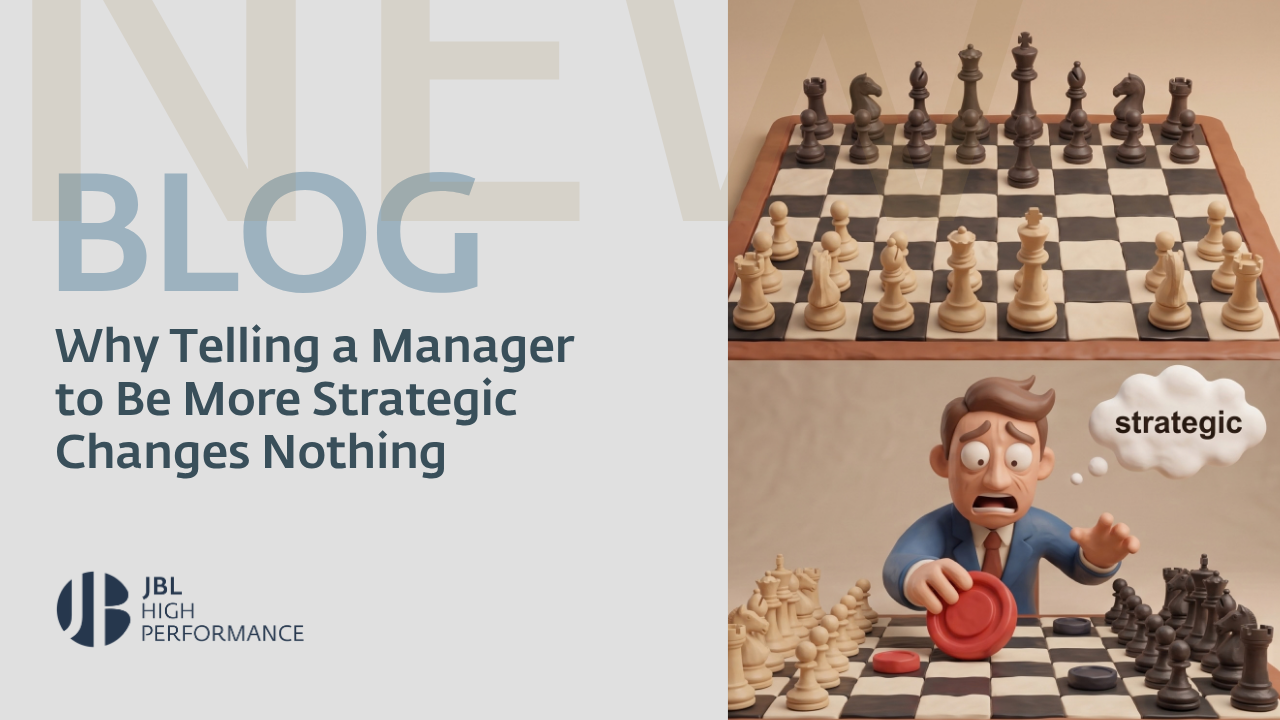
Every month, thousands of performance reviews include the same vague feedback: "You need to step up" or "Be more strategic."
Most leaders walk away confused and frustrated, wondering what the hell that actually means.
When senior leadership uses these phrases, they are not asking you to think bigger thoughts or attend more strategy meetings.
After working with 3,000+ leaders, I've decoded what's actually being said: "You're not working on the things that add the most value."
Being strategic means ruthlessly focusing on the work that creates the biggest impact for the business. What kills me is that most leaders are drowning in the wrong work, wondering why they're not getting recognised, not getting promoted, not getting the respect they deserve.
You're Working Hard. You're Working on the Wrong Things.
You're working 60-hour weeks, solving problems left and right, the person everyone comes to when things need fixing. And yet, when review time comes, you get that soul-crushing feedback about needing to "step up." It's infuriating because you know you're working harder than anyone else.
I hate to say it, but you're working on the wrong things.
Most leaders hear "be more strategic" and think they need to read more business books, use bigger words in meetings, or create more PowerPoints about vision. Strategic leaders ask one question before everything they do: "Is this the highest value work I could be doing right now?"
What a Strategic Week Actually Looks Like
The non-strategic leader's week
Picture a non-strategic leader's week:
- Five meetings about project updates
- Reviewing reports that could be automated
- Solving problems their team could handle
- Completing tasks that feel urgent but aren't important
The result: exhausted, overwhelmed, and invisible to senior leadership.
The strategic leader's week
A strategic leader's week looks different:
- They identify and remove the biggest constraint limiting team performance
- They develop two team members to handle decisions that were bottlenecking progress
- They connect with key stakeholders to align on priorities that will shape next quarter's results
Same hours worked, completely different business impact and career trajectory.
Are you the bottleneck?
Take the two-minute assessment and see exactly where work is queueing around you, and what to hand over first.
What Your Boss Is Really Watching
When you get that feedback, your boss isn't questioning your work ethic. They can see you're busy. They're questioning whether you understand what moves the business forward. They're watching you sprint in the wrong direction and wondering if you'll ever figure it out.
The pain of this is real. You're giving everything you've got and it feels like it's not enough. You're watching colleagues get promoted while you're stuck doing the "important" work that nobody seems to value. You might even be starting to question whether you're cut out for senior leadership at all.
How to Shift This
When you get feedback about being "more strategic," audit where you're spending your time and energy.
Ask yourself:
- What business problem am I solving? (Not what tasks am I completing)
- What would happen if I wasn't here? (This reveals your actual value)
- How does my work connect to our biggest priorities? (This is strategic thinking)
If you can't answer these clearly, you're not being strategic. You're being busy, and busy doesn't get promoted.
The most successful leaders I work with are not necessarily the smartest or hardest working. They're the ones who identify and focus on the highest value work. They've learned to stop being busy and start being valuable.
Jimmy Burroughes helps senior leaders in operationally complex industries transform from firefighters to strategic leaders. His "Simplify to Amplify" methodology has helped 3,000+ leaders build sustainable systems that scale.
If this sounds like your week
Your managers are not the problem. They are where the problem is stuck.
When your last leadership spend was signed off, did anyone go back to those managers' bosses and ask what changed? That question is the JBL Outcome Standard, and it is how I work.
- Find the friction. A short diagnostic that shows which decisions are stalling, and at what level.
- Am I the bottleneck? Ten questions on where your week is actually going.
- How I work with GMs. Six weeks, one hour a week, up to twelve of your managers, scored by their own bosses.
- Beat Burnout, Boost Performance. The book.
- The High Performance Leader podcast.
Managers I work with reclaim around four hours a week, and their bosses score the change 8.75 out of 10. Would it be a crazy idea to find out how we did this? Book a scoping call.
Start this week
Busy all day and still behind?
The Quick-Win Pack is five five-minute fixes for the overloaded leader, each built on a framework I use with paying clients. Every fix runs live on the page and hands you a finished, ready-to-use plan in minutes, with no AI account of your own needed. Just $19, and included free with Amplify and the Six Week Reset.
Get the Quick-Win PackQuestions managers ask about this
How can I tell if my work is truly strategic?
Ask yourself what business problem you are solving, what would happen if you weren’t there, and how your work connects to the organisation’s top priorities. If you cannot clearly answer these, you are likely busy with tasks that do not add the most value, rather than focusing on strategic work that drives impact.
What does being a strategic leader actually involve?
Being strategic means focusing ruthlessly on the highest value work that moves the business forward. This includes identifying and removing constraints, developing your team to handle decisions, and aligning with key stakeholders on priorities. It’s about working on what matters most, not just attending more meetings or creating reports.
Why do some managers get feedback to ‘be more strategic’?
This feedback usually means they are busy with urgent but low-impact tasks instead of focusing on work that creates the biggest business value. Senior leaders see their effort but question whether they understand what truly moves the business forward, as they may be working hard in the wrong areas.
How can I shift from being busy to adding more value as a leader?
Start by auditing how you spend your time and energy. Prioritise solving significant business problems, delegate routine tasks to your team, and focus on activities that directly impact key business goals. Stop doing everything yourself and develop others to handle decisions that create bottlenecks.
Explore this topic
Hear this discussed on the podcast
Episodes of The High Performance Leader that cover the same ground.

Jimmy Burroughes
FounderFormer British Army officer and corporate GM who has transformed nearly 3,500 managers into leaders across 30+ organisations. Creator of the Simplify to Amplify methodology, author of Beat Burnout, Ignite Performance, and two-time Global Recognition Award winner.
Keep exploring
Want to know where the drag really is?
Before you change anything, get an honest read on the friction slowing your team down. Take a short, free diagnostic and see exactly where the time is going.