


Rowing Through Treacle: When Friction Becomes the Culture
Executives, directors, and operational leaders whose teams are caught in constant firefighting, slow approvals, and meeting overload.
What the conversation covers
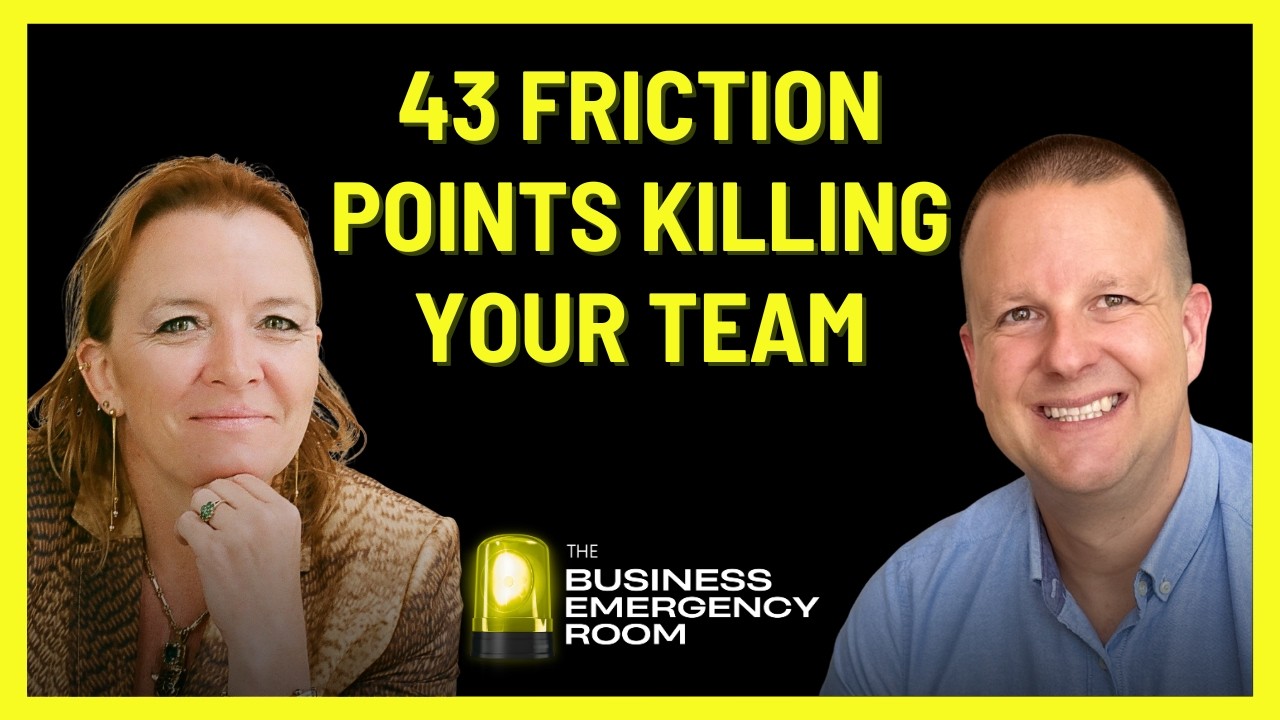
Over 140 billion dollars is spent annually on leadership development, yet employee engagement and executive trust remain near all-time lows. On The Business Emergency Room, host Maartje van Krieken invites Jimmy to examine why traditional corporate training fails. Jimmy points out that most programmes obsess over vanity metrics, such as attendance or course satisfaction, instead of measurable commercial outcomes. High-performing individuals are not the root problem in struggling organisations. The issue lies within the broken systems they operate in, forcing capable people to spend their days rowing through treacle.
Jimmy highlights the hidden drag of workplace friction, drawing from 43 distinct friction points identified through his advisory work. These operational bottlenecks manifest as endless firefighting, sluggish decision-making, and constant operational escalations. When organisations try to solve these issues, they often bring in culture coaches who simply turn up the pressure by setting bigger goals. Instead of piling on more work or extra layers of process, true operational turnaround requires deliberate subtraction. Clearing out systemic blockers allows motivated employees to actually execute the roles they were hired to do.
A major contributor to organizational paralysis is risk aversion and the constant shifting of gears. Jimmy breaks down the heavy cognitive cost of multitasking, particularly altitude switching between high-level strategy and low-level tactical problems, as well as functional switching between leading a team and being an executive peer. Each interruption carries an enormous recovery penalty that destroys productivity. Leaders can counter this by granting unambiguous decision latitude, establishing clear financial thresholds, and allowing teams to graze their knees on low-stakes decisions early in their careers.
To diagnose the health of an organisation rapidly, senior leaders need to cut through polished reports and speak directly with frontline managers. Asking staff to articulate their top three business priorities quickly exposes systemic misalignments, lack of clarity, or an absence of psychological safety. Real performance improvement cannot come from generic coaching courses. It happens when companies fix the broken workflows and decision frameworks holding their managers back.
“If they're solving management level problems, which are in the tens of thousands to hundreds of thousands of dollars range, they're missing the million dollar opportunities.”
Key takeaways
- Measure leadership development by real business outcomes like reduced escalations and faster decisions, not by attendance or course satisfaction scores.
- Eliminate bottlenecks by defining explicit spending and operational limits, allowing team members to make decisions independently within clear boundaries.
- Use the ROLES framework to clarify Leadership Latitude and Limits so managers understand precisely what they can decide without executive approval.
- Address the hidden drain of altitude switching, where leaders bounce between high-level strategic planning and low-level firefighting throughout the day.
- Minimise functional switching by clearly separating the persona needed to lead a team from the persona required when collaborating on an executive board.
- Allow emerging managers to graze their knees and make mistakes on low-stakes problems early, building capability before they handle critical decisions.
- Test organizational alignment by asking several team members for their top three priorities, uncovering hidden friction, confusion, or fear of reporting issues.
Where this shows up in your business
The ideas in this conversation come from the Simplify to Amplify method. To see where friction is costing your team time, try the free Leadership Friction Finder, or browse all of Jimmy's guest appearances.
Summary written by JBL High Performance from the episode audio. The episode belongs to The Business Emergency Room Podcast and Maartje van Krieken.