


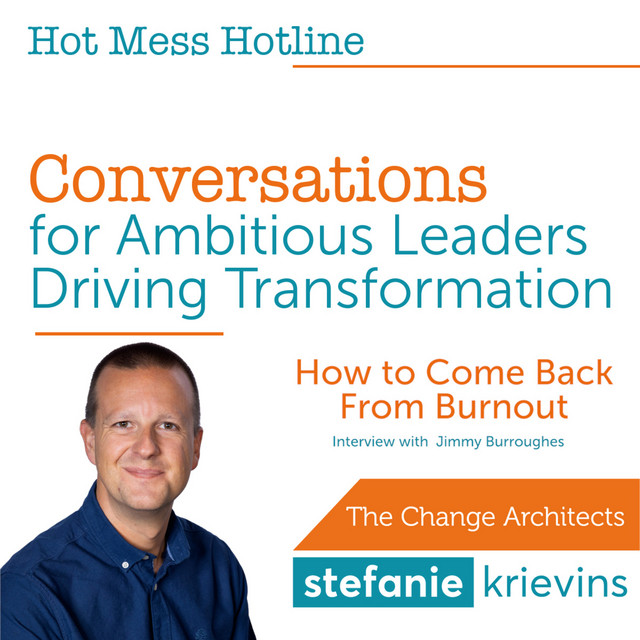
How to Come Back from Burnout
Ambitious corporate leaders, executives and team managers who feel overwhelmed, struggle to switch off, or want to prevent exhaustion in themselves and their teams.
What the conversation covers
In this episode of Hot Mess Hotline, host Stephanie Cravens sits down with Jimmy Burroughes to unpack what burnout really is and how leaders can recover from it. Jimmy recounts his early military training at Sandhurst, where excellence was considered a mere B-grade, instilling a high-performance mindset that later contributed to his personal crisis. Managing an eight-figure operational role in New Zealand whilst completing an MBA pushed him past his limits, culminating in his resignation and life completely unravelling over a three-month period.
Jimmy highlights the distinction between acute exhaustion and actual burnout. While stress often creates frustration and frantic firefighting, true burnout is characterised by apathy, low energy and cognitive fog. He explains that traditional fixes, such as taking a two-week holiday, do not work because returning to the exact same environment merely restarts the cycle. Instead, sustainable recovery requires understanding the underlying causes, resting deeply, and making active changes to working patterns and expectations.
Addressing long-term prevention, Jimmy outlines the role of brain networks and the necessity of purpose. High achievers spend excessive time in the task processing network, depleting their cognitive energy and crowding out reflection. By intentionally activating the default mode network through regular, unstructured downtime, leaders gain the mental clarity needed to make strategic choices. He also breaks down how aligning individual, role, team and organisational purpose helps prevent overwhelm and builds sustainable performance across teams.
“When you slow down, you actually speed up, because you're not rushing around trying to keep all the plates spinning.”
Key takeaways
- Schedule 30 to 45 minutes of device-free downtime weekly to engage the default mode network and clear mental fog.
- Recognise burnout indicators early, distinguishing everyday workplace stress from severe emotional apathy, mental exhaustion and cognitive shutdown.
- Avoid relying on short holidays to fix burnout, since returning to an unchanged work environment quickly recreates exhaustion.
- Target 80 to 85 percent effort instead of unsustainable 110 percent exertion to maintain long-term high performance.
- Audit daily activities and stop doing tasks that have no clear organisational, team or role purpose.
- Support struggling colleagues by quietly reducing workload pressure rather than attempting complex coaching conversations when cognitive energy is low.
- Establish clear boundaries by closing the laptop at five o'clock once a week or leaving it behind over the weekend.
Where this shows up in your business
The ideas in this conversation come from the Simplify to Amplify method. To see where friction is costing your team time, try the free Leadership Friction Finder, or browse all of Jimmy's guest appearances.
Summary written by JBL High Performance from the episode audio. The episode belongs to Hot Mess Hotline and Leadership Coaching Team.