


Beating Burnout and Igniting Performance: Interview with Jimmy Burroughes
Senior leaders and HR professionals looking to identify early signs of exhaustion and build a resilient, high-performing team culture.
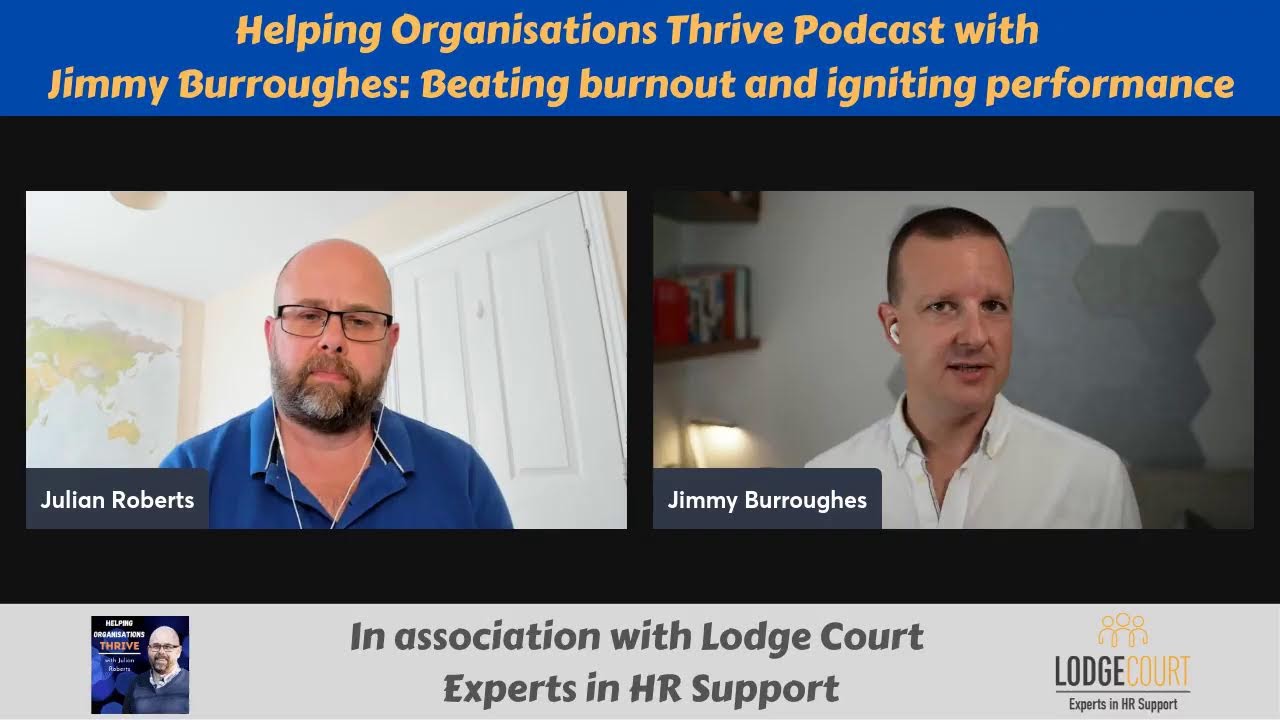
What the conversation covers
Jimmy joins host Julian Roberts on Helping Organisations Thrive to discuss why burnout has become widespread and how leaders can build sustainable performance. Jimmy shares his personal breakdown in 2017 as a general manager in New Zealand, where intense restructuring, executive turnover, an MBA programme, and a sudden 20 million dollar revenue gap pushed him into severe exhaustion. Relying on caffeine, poor food, and alcohol to cope, he eventually resigned and spent six weeks unable to function normally.
Reflecting on the wider corporate landscape, Jimmy argues that burnout is rooted in outdated management models that prioritise output over people. Leaders are rarely trained to manage complexity, uncertainty, and emotional well-being. Rather than treating burnout purely as an individual failing or a consequence of the pandemic, organisations need to address structural causes, including constant fear of job cuts, lack of purpose, and the erosion of human connection in day-to-day operations.
Jimmy breaks down five core pillars organisations must cultivate: clear purpose, removing fear, fostering connection, encouraging exploration and controlled risk-taking, and protecting genuine downtime. He also details how companies can spot early warning signs of distress by looking beyond high-level engagement surveys to examine turnover patterns, health and safety incidents, and subtle behavioral shifts among team members.
“A one-to-one should be a check-in with that person: 'How are you doing? What's going on for you?'”
Key takeaways
- Clarify organisational and team purpose so employees understand why their work matters.
- Treat one-to-one meetings as genuine personal check-ins rather than transactional project catch-ups.
- Encourage controlled experiments and curiosity instead of running high-compliance cultures driven by fear.
- Actively manage downtime by discouraging evening emails, weekend work, and banked leave.
- Run prioritization exercises with three columns: clear purpose, wishy-washy purpose, and no idea, then stop doing low-value tasks.
- Analyse granular metrics, including turnover, EAP referrals, and behavioural shifts, rather than relying on aggregated engagement survey scores.
Where this shows up in your business
The ideas in this conversation come from the Simplify to Amplify method. To see where friction is costing your team time, try the free Leadership Friction Finder, or browse all of Jimmy's guest appearances.
Summary written by JBL High Performance from the episode audio. The episode belongs to Helping Organisations Thrive and Julian Roberts.