Busy Work vs Breakthrough Work: Why Results Stall
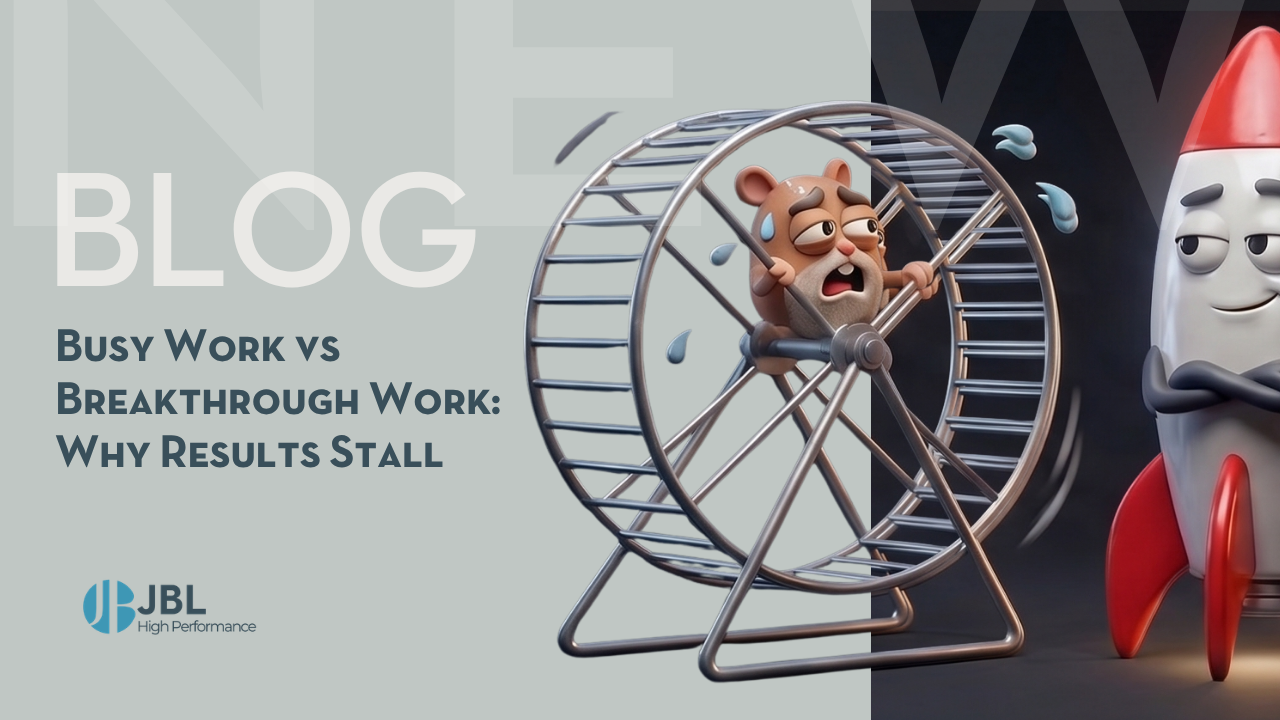
When I coach managers of managers, I see the same pattern. Diaries full, meetings that update but never decide, teams visibly busy while the results that matter barely move. It feels like progress because there is a lot of motion. It is not. This is busy work.
Breakthrough work is different. It creates clarity, removes friction, and builds capability so the system performs without you having to be in every room. It compounds. This is the essence of strategic work and high impact work.
I learned this distinction early as a young Army officer. There was always plenty to do: radios buzzing, reports to write, plans to polish. None of that mattered if the mission was unclear or the team could not execute. The same rule applies when you lead leaders. Your job is to create conditions where important work happens at pace, without drama. This requires outcome focused leadership to drive real business outcomes.
What Busy Work Actually Looks Like
Busy work fills time without moving the outcomes you care about. It produces activity, not advantage. It lives in:
- Status meetings that update but never decide
- Deck-polishing and inbox triage
- Slack ping-pong
- Decisions that roll uphill because no one knows where the lines are
If you stopped doing it for two weeks and nothing that matters would break, it is busy work. If you cannot explain in one sentence how it moves the strategy, it is probably noise.
What Breakthrough Work Does Instead
Breakthrough work is the small set of actions that change how your system performs. It:
- Aligns people on outcomes
- Turns meetings into commitments
- Pushes decisions to the edge with clear guardrails
- Develops leaders so you are less of a bottleneck next month than you are today
Each improvement makes the next one easier.
Breakthrough work is the small set of actions that change how your system performs. Each improvement makes the next one easier.
Why Leaders Drift Into Busyness
Role clarity at the manager-of-managers level is often weak. Without a clear view of your real job, you reach for familiar tasks your team should be doing. Busy work also hides a lack of priorities and accountability. We all do it. Your responsibility is to reduce it wherever possible to improve overall productivity and efficiency.
Are you the bottleneck?
Take the two-minute assessment and see exactly where work is queueing around you, and what to hand over first.
What Real Impact Looks Like
Impact shows up as outcomes delivered and capability built. You see:
- Fewer escalations, because decisions are made at the right level
- Cleaner, faster decisions, because the guardrails are visible
- Time back for thinking, because you are not re-deciding work you already delegated
- Steadier results, because the system, not your heroics, is doing the work
That is the point of leadership at this level: design the system so performance is repeatable without you in every room.
The Shift That Changes Everything
Across industries, I see the same drift into busyness when leaders step up a level. The stakes rise and so does the noise. The answer is more effort applied to clearer intent, simpler communication and stronger operating rhythms that push ownership down and keep focus high. Small shifts, done consistently, change the way your whole organisation moves.
Where is the friction in your team?
The Leadership Friction Finder pinpoints where effort is leaking, so you fix the cause rather than the symptom.
How We Help at JBL High Performance
Amplify exists to help managers of managers make this shift. We work on clarity, decision rights and operating rhythm so your impact compounds and the busy work fades. If you want support to move from activity to advantage, this is exactly what we do at JBL High Performance.
Practical Steps Toward Breakthrough Work
To combat busy work, leaders must master time management and avoid the traps of procrastination. Fostering a culture of deep work can drastically improve your team's output. Methodologies like GTD (Getting Things Done) and lean management principles can help eliminate fake work and idle time. By reducing meeting overload and email overload, you can shift your workplace culture toward value-added work. Effective task management is the key to breaking free from the cycle of busyness and achieving true productivity.
Start this week
Busy all day and still behind?
The Quick-Win Pack is five five-minute fixes for the overloaded leader, each built on a framework I use with paying clients. Every fix runs live on the page and hands you a finished, ready-to-use plan in minutes, with no AI account of your own needed. Just $19, and included free with AMPLIFY and the Six Week Reset.
Get the Quick-Win PackQuestions managers ask about this
How can I tell if my team is doing busy work?
Busy work keeps your team active but does not move key outcomes. If stopping a task for two weeks causes no issues, or if you cannot link it clearly to your strategy, it is likely busy work. Look for activities like unnecessary meetings, endless updates without decisions, or repetitive tasks that don’t improve performance.
What defines breakthrough work in team management?
Breakthrough work creates clarity, removes friction, and builds capability, allowing the system to perform without constant oversight. It aligns people on outcomes, turns meetings into decisions, pushes decisions to the right level, and develops leaders to reduce bottlenecks. This work improves the system’s performance steadily and sustainably.
Why do managers often fall into busy work traps?
Managers without clear role clarity or priorities tend to revert to familiar, low-impact tasks. Busy work also fills gaps where accountability is missing. This happens more when leaders move up a level and face more complexity and noise. Without clear intent and decision rights, teams default to activity rather than meaningful progress.
How can I reduce busy work and improve team performance?
Focus on clearer intent, simpler communication, and stronger operating rhythms that push ownership down the chain. Clarify decision rights and role responsibilities to prevent bottlenecks. Regularly review which decisions stall and at what level. Small, consistent changes that align work with strategic outcomes help shift your team from activity to advantage.
Explore this topic
Hear this discussed on the podcast
Episodes of The High Performance Leader that cover the same ground.

Jimmy Burroughes
FounderFormer British Army officer and corporate GM who has transformed nearly 3,500 managers into leaders across 30+ organisations. Creator of the Simplify to Amplify methodology, author of Beat Burnout, Ignite Performance, and two-time Global Recognition Award winner.
Keep exploring
Want to know where the drag really is?
Before you change anything, get an honest read on the friction slowing your team down. Take a short, free diagnostic and see exactly where the time is going.