How to Spot Burnout in Your Team and Five Things You Can Do Today
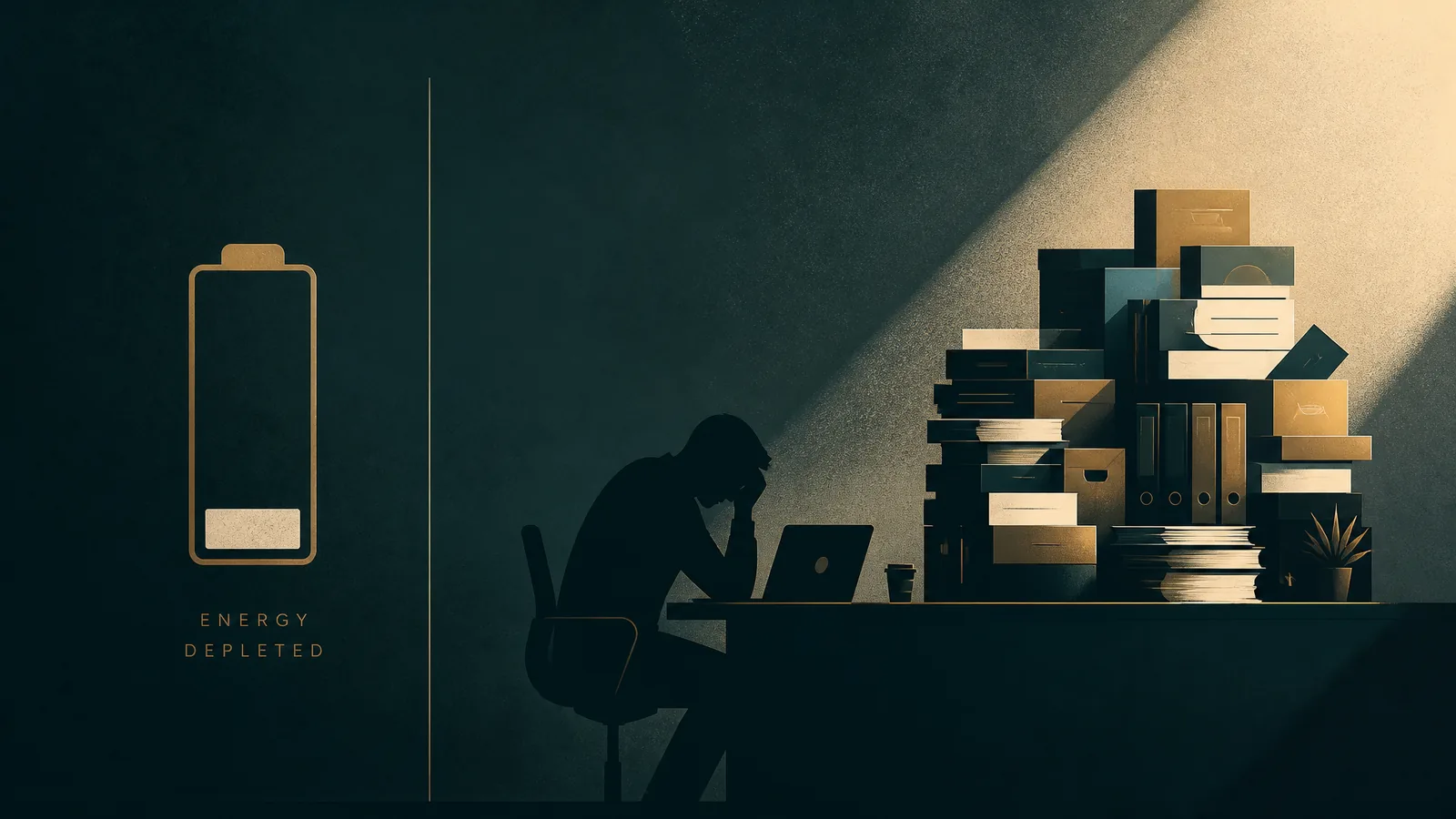
I moved back to NZ on Christmas Eve 2019 and hit the ground running. House hunting twice, buying an apartment and a car, rebuilding friendships I hadn't seen in years, all while working. I was burning the candle at both ends.
Then COVID happened. We went through the greatest disruption of a generation, one that cut across business, home life and family life. And it took its toll. People treated it like another business problem and started sprinting to solve it. Lockdowns and alert levels created psychological windows that made it feel bounded, temporary, solvable. The reality is that people are still running, except now they are trying to run a marathon at sprint pace.
When I talk to colleagues and clients, I hear the same things. Not sleeping well. Over-tired. Putting on weight. Using alcohol to self-medicate. Eating junk because the hours are too long to cook. Feeling like they have lost control. Many are still working out how to adjust to working from home and feel compelled to put in longer and longer hours. The adrenaline of the early COVID period has gone, replaced by chronic fatigue and burnout.
Some symptoms of burnout described by the Mayo Clinic are:
- Becoming cynical or critical at work
- Having to drag yourself to work and having trouble getting started
- Becoming irritable or impatient with co-workers, customers or clients
- Lacking the energy to be consistently productive
- Finding it hard to concentrate
- Using food, drugs or alcohol to feel better or to stop feeling altogether
- Changed sleep habits
This pattern is not sustainable for companies or the people in them. The longer-term consequences are worse if leaders do not act:
- Sadness, anger or irritability
- Alcohol or substance misuse
- Heart disease
- High blood pressure
- Type 2 diabetes
- Vulnerability to other illnesses
Most of the people I connect with are leaders. If they are struggling, their teams almost certainly are too. Life does not discriminate when it comes to these things.
Korn Ferry wrote a useful piece using the oxygen mask analogy: sort yourself out before you help others. That holds. But as leaders, we can also give our teams clear guidance and permission to slow down, because right now many of them do not have the presence of mind to do it themselves.
5 things I suggest:
- Consider how you want to show up to your team. Are you still at full sprint? Or are you in business continuity mode, planning and executing calmly? Your team will observe you, react to you, and most likely mirror you.
- Protect time in your calendar for recuperation and model it visibly. Whether that is a shift to a four-day week, a half-hour for meditation, or photos of you and your family at the park, share it with your team and ask them to do the same.
- Look at your annual leave plots. Many of my clients have not taken leave since before COVID and have been working more than five days a week. Encourage people to take a day off here and there.
- Exercise. There is extensive research on the benefits, even a five-to-ten minute walk around the building at lunch counts. Get out of the house, the office, the warehouse.
- Communicate, and keep communicating. The clearest lesson from this period is how much communication matters. What is going well, what is not, progress, challenges, good work recognised, improvement needed, expectations set. While people are in a mental fog, your team needs explicit and clear communication to feel confident they are on the right track. Those who have retreated into work-zombie burnout will not pick up on subtle or nuanced messages, so you need to spot them and step in.
There is a lot to consider when dealing with burnout. If you would like to talk more, I am happy to connect. Most of all, look after yourself first, in service to your team.
If this sounds like your week
Your managers are not the problem. They are where the problem is stuck.
When your last leadership spend was signed off, did anyone go back to those managers' bosses and ask what changed? That question is the JBL Outcome Standard, and it is how I work.
- Find the friction. A short diagnostic that shows which decisions are stalling, and at what level.
- Am I the bottleneck? Ten questions on where your week is actually going.
- How I work with GMs. Six weeks, one hour a week, up to twelve of your managers, scored by their own bosses.
- Beat Burnout, Boost Performance. The book.
- The High Performance Leader podcast.
Managers I work with reclaim around four hours a week, and their bosses score the change 8.75 out of 10. Would it be a crazy idea to find out how we did this? Book a scoping call.
#waysofworking #blog #jimmyburroughes #jimmybleadership #impact #leadershipcoaching #confidence #goals #fastgrowth #leadership #adeption #entrepreneur #impostersyndromecoach #leadershipdevelopment #mindsetcoach #motivation #success
#YouCanHaveSuccess #mindset #growthmindset #personaldevelopment #mindfulness #selflove #impostersyndrome #imposter #burnout #burnedout #hybridwork #hybridworkplace #mindsetmatters
Questions managers ask about this
How can I recognise burnout symptoms in my team?
Look for signs like increased cynicism or criticism, difficulty starting work, irritability, low energy, poor concentration, changed sleep habits, and reliance on food, alcohol or drugs to cope. These symptoms indicate your team may be struggling with burnout and need support before productivity declines further.
What immediate steps can I take to reduce burnout in my team?
Start by modelling calm, steady leadership and protect time in your calendar for rest. Encourage your team to take regular breaks and annual leave. Promote short daily exercise, like a 5 to 10-minute walk. Maintain clear, frequent communication about progress, challenges and expectations to help your team stay focused and supported.
Why is my leadership style important in managing team burnout?
Your team watches and mirrors your behaviour. If you are constantly sprinting, they will feel pressured to keep up. Shifting to a calmer, business continuity mode signals it is acceptable to slow down and recover. Demonstrating balance encourages your team to do the same, reducing stress and burnout risk.
How does poor communication affect burnout in teams?
When people are mentally fatigued, they miss subtle messages. Without clear, explicit updates on what is going well, what needs improvement and what to expect, team members feel lost and anxious. Regular, direct communication helps them stay confident and engaged, preventing the mental fog that worsens burnout.
Hear this discussed on the podcast
Episodes of The High Performance Leader that cover the same ground.

Jimmy Burroughes
FounderFormer British Army officer and corporate GM who has transformed 3,000+ managers into leaders across 30+ organisations. Creator of the Simplify to Amplify methodology, author of Beat Burnout, Ignite Performance, and two-time Global Recognition Award winner.
Keep exploring
Want to know where the drag really is?
Before you change anything, get an honest read on the friction slowing your team down. Take a short, free diagnostic and see exactly where the time is going.