Why Reading About Leadership Will Not Make You a Better Leader
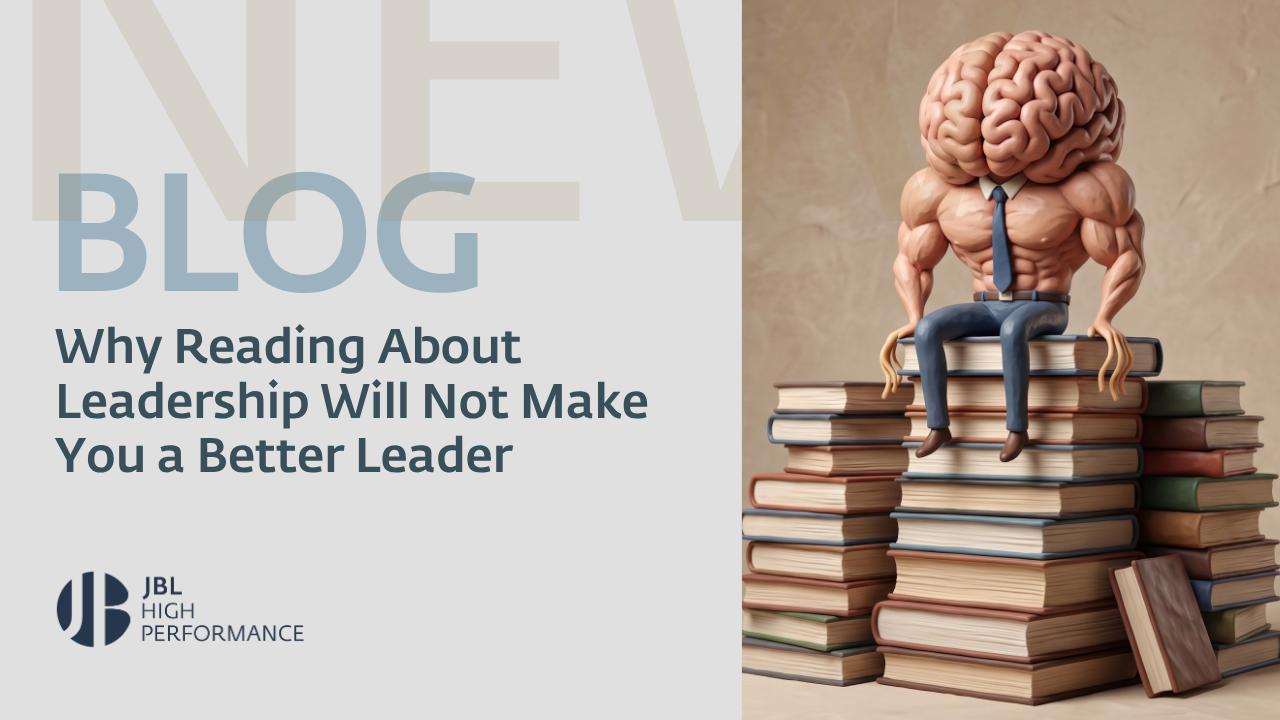
We've all met them. The leader who has read every leadership book on the shelf, can quote Simon Sinek and Brené Brown chapter and verse, and smirks slightly when you suggest that great leadership is "simple but not easy."
I met one such leader recently. The air of superiority was palpable as he rattled off his impressive reading list. Yet beneath the facade lay a troubling pattern I've seen time and time again. Every three or four years, like clockwork, his roles would become "unmanageable." Teams would burn out. Results would suffer. And he'd move on, convinced the next role would be different, with excuses about how the organisation wasn't right somehow.
The Truth He Was Missing
Knowledge without implementation isn't wisdom. It's just trivia.
The gap between knowing and doing is where most leaders get stuck. Intellectually understanding concepts like psychological safety, emotional intelligence, or servant leadership is not enough. The real work begins when you have to actually:
- Have that difficult conversation you've been avoiding
- Admit you don't have all the answers
- Let go of control and trust your team to act
- Show vulnerability when everything in you screams to maintain the facade
- Put others' growth ahead of your own comfort
This is where theory meets reality, where intellectual understanding collides with the courage to act on it. Knowing the right thing to do matters far less than doing it.
The leaders we admire didn't get there by reading about leadership. They got there by leading, by making mistakes, by feeling uncomfortable doing something new and unfamiliar, by doing the inner work required to align their actions with their knowledge.
The Challenge
Pick one leadership principle you "know" but haven't fully implemented or bedded in. Maybe it's delegating more, or giving difficult feedback, or showing more vulnerability with your team.
Now commit to doing it this week. Not perfectly. Not once you've read three more books about it. Messy, clunky, imperfect action starting today.
Then let me know how it went. I will happily talk to you about it.
You won't become the leader you admire by knowing more. You'll get there by closing the gap between what you know and what you do. And I am here to help.
The path is simple, but it's not easy. And that's exactly why it works.
[About the Author: Jimmy Burroughes transforms overwhelmed managers into strategic leaders through the Simplify to Amplify methodology. Through his Amplify Leadership program, he helps leaders reclaim their time and maximize their impact.]
If this sounds like your week
Your managers are not the problem. They are where the problem is stuck.
When your last leadership spend was signed off, did anyone go back to those managers' bosses and ask what changed? That question is the JBL Outcome Standard, and it is how I work.
- Find the friction. A short diagnostic that shows which decisions are stalling, and at what level.
- Am I the bottleneck? Ten questions on where your week is actually going.
- How I work with GMs. Six weeks, one hour a week, up to twelve of your managers, scored by their own bosses.
- Beat Burnout, Boost Performance. The book.
- The High Performance Leader podcast.
Managers I work with reclaim around four hours a week, and their bosses score the change 8.75 out of 10. Would it be a crazy idea to find out how we did this? Book a scoping call.
Start this week
Busy all day and still behind?
The Quick-Win Pack is five five-minute fixes for the overloaded leader, each built on a framework I use with paying clients. Every fix runs live on the page and hands you a finished, ready-to-use plan in minutes, with no AI account of your own needed. Just $19, and included free with AMPLIFY and the Six Week Reset.
Get the Quick-Win PackQuestions managers ask about this
Why does reading leadership books not improve leadership skills?
Reading leadership books provides knowledge but does not guarantee improvement. Leadership requires applying concepts in real situations, such as having difficult conversations, admitting mistakes, and trusting your team. Without putting knowledge into practice, leaders remain stuck with theory and fail to develop the necessary experience and courage to lead effectively.
How can I close the gap between knowing and doing as a leader?
Identify one leadership behaviour you understand but haven't practiced, like delegating or giving feedback. Commit to practising it imperfectly and consistently, rather than waiting for perfect knowledge. Action, even if messy, builds experience and confidence. This approach helps convert intellectual understanding into real leadership skills over time.
What common mistakes cause leadership roles to become unmanageable?
Common mistakes include avoiding difficult conversations, trying to control everything, and failing to trust or develop your team. Leaders who rely solely on theory often burn out their teams and create frustrated environments. Recognising and addressing these behaviours by acting on leadership principles is essential to prevent roles from becoming unmanageable.
How can showing vulnerability improve my leadership effectiveness?
Showing vulnerability allows leaders to build trust and psychological safety within their teams. It means admitting you don’t have all the answers and being open about challenges. This encourages honest communication and team growth, which leads to stronger relationships and better decision-making. Vulnerability is a practical step to move beyond theory into real leadership impact.
Explore this topic
Hear this discussed on the podcast
Episodes of The High Performance Leader that cover the same ground.

Jimmy Burroughes
FounderFormer British Army officer and corporate GM who has transformed nearly 3,500 managers into leaders across 30+ organisations. Creator of the Simplify to Amplify methodology, author of Beat Burnout, Ignite Performance, and two-time Global Recognition Award winner.
Keep exploring
Want to know where the drag really is?
Before you change anything, get an honest read on the friction slowing your team down. Take a short, free diagnostic and see exactly where the time is going.