How Fear of Getting It Wrong Is Slowing Your Team Down
When did you last watch a child learn to walk?
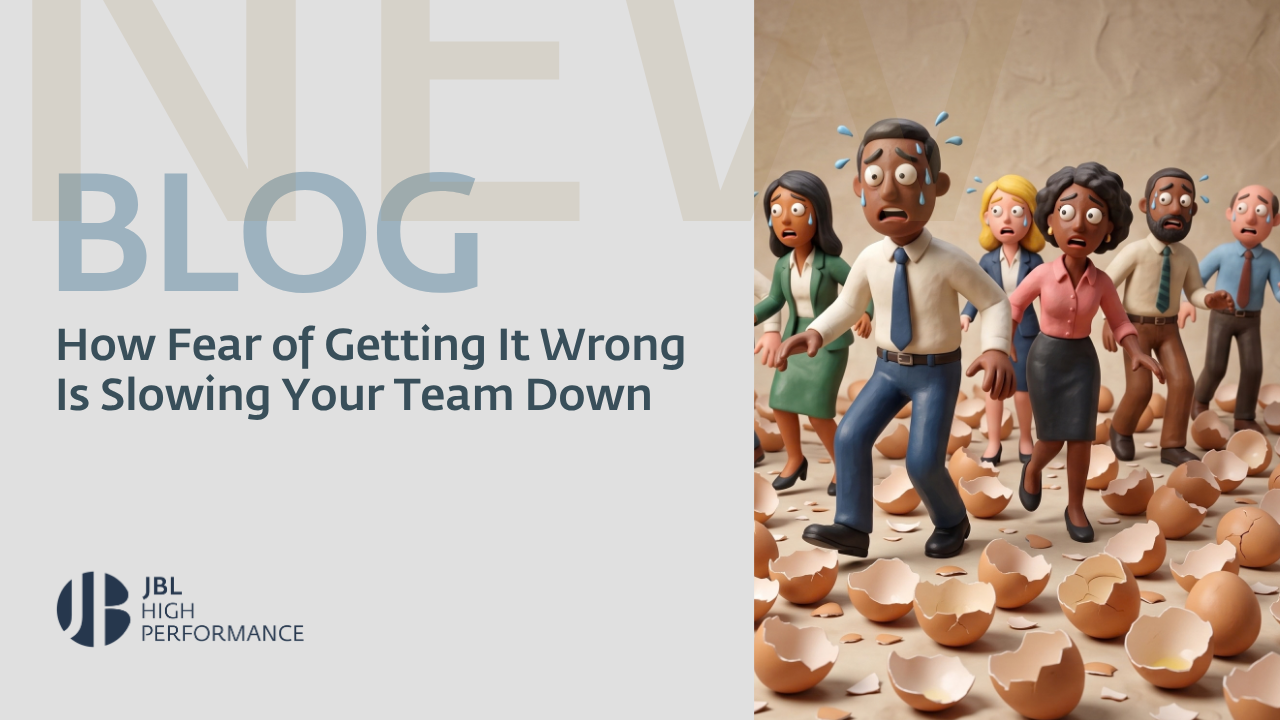
They fall constantly, spectacularly, sometimes face-first, and they laugh. Somewhere between those fearless toddler days and the role you're in now, you learned to fear falling. And without meaning to, you've passed that fear down to the sixty, eighty, a hundred-odd leaders who take their cues from you.
The pursuit of perfection creates paralysis. Projects that should take weeks stretch into months because people are terrified of getting it wrong. Innovations die in endless review cycles. Good ideas never leave the safety of someone's head.
All because we've confused grazing knees with breaking legs.
Grazed Knees vs Broken Legs
A grazed knee stings. It might bleed a little. It teaches you something about balance, speed and terrain. But it heals, usually by tomorrow.
A broken leg is serious. It requires medical intervention and impacts mobility for months. Yet in most organisations, every potential failure gets treated as though it might break the corporate leg. The result is a culture so risk-averse that it's putting the future at risk.
It's like trying to find your way through a canyon while standing still. You can analyse the paths ahead, create detailed maps of possibilities, hold meeting after meeting about the best route forward. Until you start walking, you'll never know which path leads where you need to go.
Movement creates clarity. Action reveals the way forward.
The Myth That Makes It Worse
Underneath most fear of failure sits a belief that sounds entirely reasonable: "We need all the information before we can decide." It feels like thoroughness. It feels like responsibility. It isn't.
The Apollo missions that put humans on the moon were only on their planned trajectory for 2% of their journey. NASA didn't wait for perfect conditions. They launched and adapted. Every major breakthrough in history followed the same pattern: leaders who had the courage to move and the skill to adjust, not leaders who waited until certainty arrived.
Your need for complete information before acting is fear dressed up as diligence. And while you're analysing, your competitors are moving. While you're planning, your team is losing faith waiting for clarity. While you're waiting, opportunities are closing.
Chess Versus White-Water Rafting
Many leaders treat decision-making like chess, as though the job is to see ten moves ahead before touching a piece. But modern leadership is closer to white-water rafting. Success comes from reading the immediate situation, deciding and adjusting rapidly, and trusting that the next stroke will become clear once you're moving. Waiting for the perfect line through the rapids is how you capsize.
There is also a compounding cost to delay that leaders rarely account for. Fast forward three months: the thorough analysis will be outdated. The perfect plan will need revision. But the team's trust in your leadership? That damage can be permanent.
Are you the bottleneck?
Take the two-minute assessment and see exactly where work is queueing around you, and what to hand over first.
What Fear of Failure Is Doing to Your Organisation Right Now
Amazon's Fire Phone was a complete disaster. Google Glass was a very public failure. Netflix's Qwikster lasted 23 days. These companies continue to dominate their markets because they understand something crucial: progress requires grazed knees.
Here's what's happening in your organisation right now:
- People are hiding their experiments.
- Teams are choosing safe over smart.
- Innovation is suffocating under the weight of potential perfection.
- The fear of grazing knees has stopped the whole organisation from learning to run.
Most of What You're Afraid of Is a Grazed Knee
To be clear: I'm not advocating reckless behaviour. Some failures can break legs, and those need careful management. But most of what you're afraid of? Grazed knees waiting to teach you something valuable.
Consider what you may be holding back:
- The project that might not work perfectly.
- The new approach that might need adjusting.
- The idea that's not quite fully baked.
Each one is an opportunity to learn through movement, to find the path by walking it.
The more you protect your team from small failures, the more you expose them to catastrophic ones. Teams that never graze their knees never learn to run. They never discover which paths lead to the breakthrough.
Where is the friction in your team?
The Leadership Friction Finder pinpoints where effort is leaking, so you fix the cause rather than the symptom.
How to Shift the Culture
To shift the culture, start celebrating the scrapes. Share your own failures and what you took from them. Make "What did we learn?" the first question after something goes wrong. Create space for experiments that might not work. Your team isn't listening to what you say about failure. They're watching how you react to it.
A Simple Test to Use Tomorrow
When someone brings you a new idea, ask yourself: "Is this a grazed knee or a broken leg?" Most of what holds you back is the fear of a small scrape. And when you catch yourself waiting for complete information before deciding, ask a second question: "Is this caution genuinely protecting the organisation, or is it protecting me from discomfort?" The honest answer will usually point you towards the door.
Your Challenge
Identify one "grazed knee" opportunity you've been avoiding and take it. Let your team watch you move into uncertain territory. Let them see you stumble, adjust and keep going. Let them learn that forward movement, even with occasional grazes, is the only way to find the paths others couldn't see.
Your team doesn't need you to be perfect. They need you to show them how to move forward through uncertainty, how to learn from every graze, how to keep exploring until they find the path that others missed.
Stop protecting them from grazed knees. Start teaching them how to explore.
If this sounds like your week
Your managers are not the problem. They are where the problem is stuck.
When your last leadership spend was signed off, did anyone go back to those managers' bosses and ask what changed? That question is the JBL Outcome Standard, and it is how I work.
- Find the friction. A short diagnostic that shows which decisions are stalling, and at what level.
- Am I the bottleneck? Ten questions on where your week is actually going.
- How I work with GMs. Six weeks, one hour a week, up to twelve of your managers, scored by their own bosses.
- Beat Burnout, Boost Performance. The book.
- The High Performance Leader podcast.
Managers I work with reclaim around four hours a week, and their bosses score the change 8.75 out of 10. Would it be a crazy idea to find out how we did this? Book a scoping call.
Start this week
Busy all day and still behind?
The Quick-Win Pack is five five-minute fixes for the overloaded leader, each built on a framework I use with paying clients. Every fix runs live on the page and hands you a finished, ready-to-use plan in minutes, with no AI account of your own needed. Just $19, and included free with AMPLIFY and the Six Week Reset.
Get the Quick-Win PackQuestions managers ask about this
How does fear of failure affect team progress?
Fear of failure makes teams risk-averse, causing delays and stifling innovation. When people avoid taking chances to prevent small mistakes, projects drag on and good ideas never develop. This cautious culture slows decision-making and stops teams from learning through experience, ultimately hindering progress and long-term success.
What is the difference between a grazed knee and a broken leg in leadership?
A grazed knee represents minor, manageable failures that teach lessons and allow quick recovery. A broken leg means serious setbacks needing significant intervention. Leaders should treat most mistakes as grazed knees, encouraging experimentation and learning, while carefully managing risks that could cause major damage to the organisation.
How can leaders encourage teams to take smart risks?
Leaders can encourage smart risks by sharing their own failures and lessons learned, making 'What did we learn?' the first question after a setback. Creating space for small experiments and recognising minor mistakes as learning opportunities helps teams move forward confidently without fear of harsh consequences.
Why is protecting teams from small failures harmful?
Protecting teams from small failures prevents them from gaining experience and discovering effective solutions. Avoiding minor mistakes leads to bigger, unprepared failures because teams never learn how to adapt. Allowing room for small errors helps build resilience and clarity on which paths lead to success.
Explore this topic
Hear this discussed on the podcast
Episodes of The High Performance Leader that cover the same ground.

Jimmy Burroughes
FounderFormer British Army officer and corporate GM who has transformed nearly 3,500 managers into leaders across 30+ organisations. Creator of the Simplify to Amplify methodology, author of Beat Burnout, Ignite Performance, and two-time Global Recognition Award winner.
Keep exploring
Want to know where the drag really is?
Before you change anything, get an honest read on the friction slowing your team down. Take a short, free diagnostic and see exactly where the time is going.