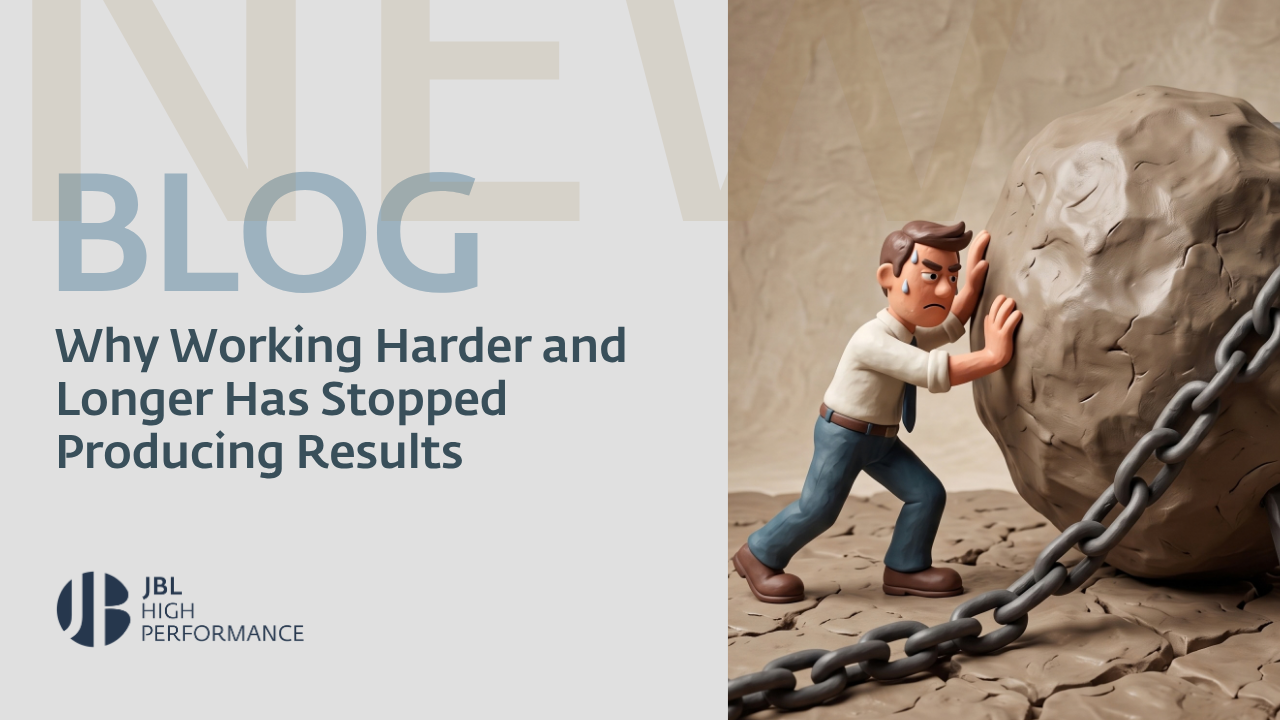
Why Working Harder and Longer Has Stopped Producing Results
Run at a Pace You Can Talk: The Leadership Lesson That Scales
If you are running a division and still feel like you are the one holding everything together, this is worth reading. When I was a young Army officer, I trained by running as fast and as far as I could until I dropped. I wore the pain like a badge. It worked for a while. Then it stopped working. Recovery took longer. Progress stalled. A mentor watched me grind myself into the ground and offered a rule I hated at first. Run so slowly you can hold a conversation with the person next to you.
I tried it. It felt awful. I did not feel like I was going anywhere. A few weeks later, everything changed. I could run and talk for longer. My stamina rose. I stopped breaking myself to make gains. I was building a system my body could sustain.
That lesson sits at the heart of leadership. Working as hard as you can may get you through your 20s. Once you manage teams, your personal effort stops scaling. You win by setting a deliberate pace the whole system can sustain, building rhythm, clarity and capability so performance compounds.
If you cannot communicate clearly while you run the business, you are moving too fast to lead it.
Endurance runners use a simple measure. If you cannot speak in full sentences, you are going too fast to build long-term capacity. In leadership, the same rule applies. If your team cannot match your cadence, you build dependency. If your calendar leaves no room to think, coach or correct course, you are optimising for speed rather than outcomes. That is the quickest path to burnout and to being seen as an operator, not a strategic player.
Slow is smooth. Smooth becomes fast. Fast becomes repeatable.
Why Sprinting Stops Scaling
Early in your career, output gets you noticed. You outwork everyone. As a manager of managers, your success depends on how the system performs without you. That shift demands different muscles:
- You move from heroics to habits.
- You replace constant escalation with simple decision frameworks.
- You trade a packed calendar for an operating rhythm.
- You stop doing your team's job and start building a team that does the job well without you.
The alternative is firefighting. You react to every crisis, attend every meeting, make every decision. You run at full tilt and confuse motion with progress. You burn out, and your team learns to wait for you rather than act.
If everything still escalates to you, you do not have a bench. You have a bottleneck.
Are you the bottleneck?
Take the two-minute assessment and see exactly where work is queueing around you, and what to hand over first.
Build the System, Grow the Stamina
Here are some systems worth working on this quarter:
Set a Clear Pace
Decide what must happen daily, weekly and monthly. Decide what must stop. Guard meaningful space in your calendar for thinking and coaching. If you run at maximum all the time, you will not build capacity. We use a tool called the 80% list to identify and solve this in Amplify.
Create an Operating Rhythm
- Hold a weekly leadership meeting focused on delivery, priorities and roadblocks.
- Use short huddles to surface risks and confirm commitments.
- Review your big rocks monthly and close the projects that no longer matter.
Simplify Priorities and Messaging
Choose three outcomes for the quarter and make them visible on a single page. Use leading indicators, named owners and specific dates. If it does not fit on the page, it will not drive performance.
Push Decisions to the Edge
Push decisions to the edge of the organisation with clear guardrails. State where you decide, where you advise and where your leaders decide. Capture simple playbooks for recurring choices so the team learns once and reuses them. This is how you scale judgement.
Build Leaders, Not Dependency
Coach your managers to coach their managers. Watch escalations fall, handoffs improve and commitments tighten. That is how you know it is working.
Protect Recovery to Protect Performance
No one sets a personal best on every run. Install recovery cycles and meeting-free blocks. Take proper time off and model it. Burnout is a system failure. Design it out.
Your 30-Day Reset
Do these four things over the next month:
- Write the three outcomes that matter most this quarter and share them on one page.
- Replace status updates with decision-centric meetings and end every agenda item with an owner, a date and a definition of done.
- Identify two recurring decisions and create guardrails so your team can make them without you.
- Block two ninety-minute thinking windows each week and use them to clarify strategy, not clear email.
Do this for a month and you will feel the shift. Your team will anticipate problems and solve them before they reach your desk. Your calendar will show space to think, and you will use it to move the business forward. Results will become consistent, then climb. Consistency compounds.
Your job is to set a pace your team can match, then install the systems that turn effort into repeatable performance.
That is how you move from firefighting to strategic leadership and build stamina at scale.
At JBL High Performance, this is exactly what we help time-stretched managers achieve through our Simplify to Amplify approach and the Amplify Leadership programme. If you want to stop sprinting and start compounding, explore how we work at JBL High Performance: https://www.jblhighperformance.com/
If this sounds like your week
Your managers are not the problem. They are where the problem is stuck.
When your last leadership spend was signed off, did anyone go back to those managers' bosses and ask what changed? That question is the JBL Outcome Standard, and it is how I work.
- Find the friction. A short diagnostic that shows which decisions are stalling, and at what level.
- Am I the bottleneck? Ten questions on where your week is actually going.
- How I work with GMs. Six weeks, one hour a week, up to twelve of your managers, scored by their own bosses.
- Beat Burnout, Boost Performance. The book.
- The High Performance Leader podcast.
Managers I work with reclaim around four hours a week, and their bosses score the change 8.75 out of 10. Would it be a crazy idea to find out how we did this? Book a scoping call.
Start this week
Busy all day and still behind?
The Quick-Win Pack is five five-minute fixes for the overloaded leader, each built on a framework I use with paying clients. Every fix runs live on the page and hands you a finished, ready-to-use plan in minutes, with no AI account of your own needed. Just $19, and included free with AMPLIFY and the Six Week Reset.
Get the Quick-Win PackQuestions managers ask about this
Why does working longer hours stop producing results?
Working longer hours often leads to burnout and reduced effectiveness. When you run at full speed constantly, recovery takes longer and progress stalls. Instead of building sustainable capacity, you create dependency and firefighting cycles that prevent your team from performing independently.
How can I set a sustainable pace for my leadership team?
Set a clear pace by defining daily, weekly and monthly priorities. Protect time for thinking and coaching. Use an operating rhythm with regular leadership meetings focused on delivery and roadblocks. Simplify priorities to three key outcomes per quarter and push decisions down with clear guardrails. This builds stamina and consistent performance.
What are signs I am the bottleneck in my team?
If every decision escalates to you and your team waits for your input before acting, you are the bottleneck. Frequent firefighting, overloaded calendars and lack of delegation show you haven’t built enough leadership depth. Coaching managers to coach their teams reduces escalations and improves handoffs, releasing you from constant intervention.
How do I move from firefighting to strategic leadership?
Shift focus from doing your team’s work to building a system that runs without you. Simplify priorities, create decision frameworks and hold regular leadership meetings. Protect thinking time and install recovery cycles. This enables you to communicate clearly, coach effectively and build repeatable performance, moving from reactive to strategic leadership.
Explore this topic
Hear this discussed on the podcast
Episodes of The High Performance Leader that cover the same ground.

Jimmy Burroughes
FounderFormer British Army officer and corporate GM who has transformed nearly 3,500 managers into leaders across 30+ organisations. Creator of the Simplify to Amplify methodology, author of Beat Burnout, Ignite Performance, and two-time Global Recognition Award winner.
Keep exploring
Want to know where the drag really is?
Before you change anything, get an honest read on the friction slowing your team down. Take a short, free diagnostic and see exactly where the time is going.